
 10 May 2026
Admin ISO
51 Comment
10 May 2026
Admin ISO
51 Comment
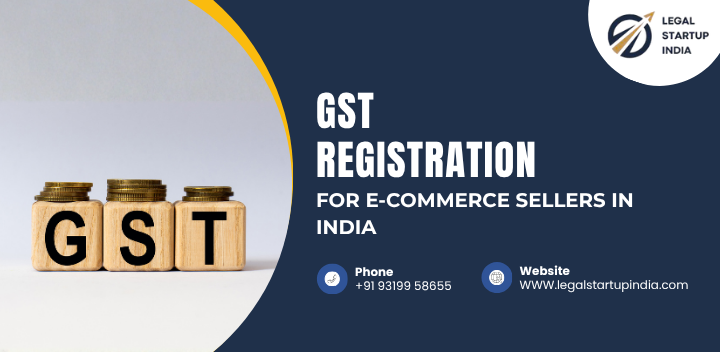
GST Registration for E-commerce Sellers in India
You're Selling Online — But Are You Legally Protected?
You listed your first product on Amazon. Orders started coming in. Business felt good. Then someone asked: "Do you have a GSTIN?"
That's when things got confusing.
If you're an online seller in India — whether you're selling on Flipkart, Meesho, Shopify, or running your own D2C brand on Instagram — GST registration is not just a formality. It's the difference between running a legally protected business and exposing yourself to fines, account suspension, and legal risk.
The good news? GST registration for e-commerce sellers is simpler than most people think — especially when you have the right guidance.
In this guide, we'll walk you through everything: what GST means for online sellers, whether you actually need it, how to register, what documents you need, and how to stay compliant without losing sleep.
If you'd rather skip the reading and get started right away, our GST registration experts at Legal Startup India are just a WhatsApp away.
What is GST Registration for E-commerce Sellers?
GST — Goods and Services Tax — is India's unified indirect tax system that replaced a complicated web of VAT, service tax, excise duty, and other levies. It came into effect on July 1, 2017, and it applies to virtually every business that sells goods or services in India.
For e-commerce sellers specifically, GST registration means obtaining a unique 15-digit GSTIN (Goods and Services Tax Identification Number) that identifies your business in the national tax system.
Once registered:
- You can legally collect GST from your customers
- You can claim Input Tax Credit (ITC) on your purchases
- You can list on marketplaces like Amazon and Flipkart
- Your business gains legal recognition under Indian tax law
Without a GSTIN, most e-commerce platforms simply won't let you sell. And if you try to, you're operating in a legal grey area that can catch up with you very quickly.
Is GST Mandatory for Online Sellers in India?
Yes. And this is where many new sellers get surprised.
Under the CGST Act, 2017, e-commerce sellers are required to register for GST regardless of their annual turnover. This is a special rule that applies only to online marketplace sellers — and it's different from the general GST threshold of ₹40 lakhs (for goods) or ₹20 lakhs (for services).
Here's what this means for sellers on different platforms:
Amazon Sellers
Amazon India requires every seller to provide a valid GSTIN before they can list products. There are no exemptions based on turnover for marketplace sellers. Whether you sell one product a month or a thousand, you need a GST number.
Flipkart Sellers
Same rule applies. Flipkart's seller registration process has a mandatory field for GSTIN. Without it, your seller account simply cannot go live.
Meesho Sellers
Meesho has seen a surge of small-scale and home-based sellers. While Meesho did have some flexibility for very small sellers in earlier years, the platform now strongly recommends and increasingly requires GST registration for consistent and compliant selling.
Shopify Store Owners
If you run your own Shopify store and sell to customers across India, GST registration is required once your turnover crosses the threshold — or if you're supplying goods across state lines (inter-state sales require GST registration regardless of turnover).
Own Website / Direct Sellers
If you sell through your own website or social media (Instagram, WhatsApp), the standard threshold rules apply: ₹40 lakhs annual turnover for goods, ₹20 lakhs for services. However, if you use payment gateways or delivery aggregators, GST registration gives you far greater credibility and smoother operations.
Bottom line: If you sell on any online marketplace in India, you need GST registration from day one — regardless of how much you earn.
Who Needs GST Registration for Online Selling?
If you fall into any of the following categories and sell online, GST registration applies to you:
- Resellers — buying products wholesale and selling them on Amazon, Flipkart, or Meesho
- Manufacturers — producing goods and selling them through online channels
- Dropshippers — facilitating sales without holding inventory
- D2C Brands — selling directly to consumers through owned digital channels
- Service Providers — freelancers, consultants, or agencies selling services online
- Importers/Exporters — dealing in goods across borders
- Instagram & WhatsApp Sellers — running informal but growing online businesses
- Ecommerce Startups — launching new online-first businesses
Even if you're selling handmade products from home or running a side hustle on the weekends, if it involves online commerce, it's worth getting registered to protect yourself legally and access proper business banking and platform features.
Benefits of GST Registration for E-commerce Sellers
Getting your GSTIN isn't just about compliance. There are real, practical benefits that can help your business grow.
1. You Can Legally Sell on Major Marketplaces
Amazon, Flipkart, and Meesho require GST. Without it, there's no seller account. With it, you're in business.
2. Claim Input Tax Credit
Every time you purchase goods, packaging, or services for your business, GST is charged to you. With registration, you can claim that tax back — reducing your overall tax burden significantly. For growing sellers, this can amount to substantial savings.
3. Build Credibility With Customers and Brands
Buyers and brand partners trust sellers who are GST registered. It signals that your business is legitimate and professionally run.
4. Expand Across State Lines
Want to ship from Delhi to Chennai? Or Noida to Mumbai? Inter-state sales require GST registration. Without it, you're limited to selling within your state.
5. Business Loan Eligibility
Banks and NBFCs use GST filings as proof of business turnover when evaluating loan applications. Regular GST filers find it significantly easier to access credit.
6. Professional Tax Invoicing
GST registration allows you to issue proper tax invoices — a must for B2B selling and for customers who want to claim ITC themselves.
7. Avoid Penalties and Legal Risk
Selling without GST when required is a punishable offence. Registration protects you from fines, notices, and account suspensions.
GST Registration Process for Online Sellers — Step by Step
The GST registration process is done entirely online through the GST portal (gst.gov.in). Here's how it works:
Step 1: Gather Your Documents
Before you begin, collect all the required documents (see the next section for the full list). Having everything ready upfront saves time.
Step 2: Visit the GST Portal
Go to gst.gov.in and click on "New Registration" under the Services menu.
Step 3: Fill Part A — Basic Details
Enter your PAN number, mobile number, and email address. An OTP will be sent to verify both. Once verified, you'll receive a Temporary Reference Number (TRN).
Step 4: Fill Part B — Business Details
Log in with your TRN and complete the full application — business name, address, business type, nature of goods/services (HSN/SAC codes), bank details, and upload the required documents.
Step 5: Verification & ARN Generation
Submit the application using a Digital Signature Certificate (DSC) or Aadhaar-based e-sign. An Application Reference Number (ARN) will be generated immediately. This can be used to track your application.
Step 6: GST Officer Review
A GST officer reviews your application within 7 working days. They may raise queries or ask for additional documents. You have 7 days to respond to any clarifications.
Step 7: GST Certificate Issued
Once approved, your GST Registration Certificate is issued electronically. Your GSTIN is now active and you can begin using it on your seller accounts and invoices.
Pro Tip: Working with an experienced GST registration consultant like Legal Startup India ensures your application is filed correctly the first time, avoiding delays due to errors or missing information.
Documents Required for GST Registration
Here's the standard document checklist for an individual or proprietor registering for GST:
Identity & Address Proof:
- PAN Card of the applicant / business
- Aadhaar Card of the proprietor / director / partner
- Passport-size photograph
Business Address Proof:
- Electricity bill / property tax receipt (for owned premises)
- Rent agreement + NOC from landlord (for rented premises)
- Consent letter (if using a family member's property)
Bank Account Proof:
- Cancelled cheque
- Bank statement (showing account number and IFSC)
For Companies / LLPs:
- Certificate of Incorporation
- MOA / AOA or LLP Agreement
- Board Resolution (authorising the signatory)
- PAN and Aadhaar of all directors / partners
E-commerce Specific:
- Business name as used on the marketplace
- HSN codes for the products you intend to sell
Need help with documentation? Our team at Legal Startup India helps you prepare, verify, and upload every document — so nothing gets rejected.
GST Rules for Amazon, Flipkart & Meesho Sellers
Each major marketplace has its own onboarding process, but all of them operate within the same GST legal framework.
Amazon India
Amazon collects Tax Collected at Source (TCS) at 1% on the net value of taxable supplies made through its platform. This is deposited with the government on your behalf and reflects in your GST return (GSTR-2B). You must have a GSTIN to receive disbursements from Amazon.
Flipkart
Flipkart similarly deducts TCS and requires GSTIN for seller registration. Flipkart sellers without GST cannot generate tax invoices on the platform — which means they legally cannot sell.
Meesho
Meesho operates as a marketplace and also deducts TCS. Small resellers on Meesho often assume they're exempt, but the law doesn't differentiate based on income level for marketplace sellers. GST registration is strongly recommended.
Common Rule for All Marketplace Sellers
Under Section 52 of the CGST Act, every e-commerce operator is required to deduct TCS and file returns. As a seller, you are responsible for including this in your own GST filings and reconciling your returns accordingly.
GST for Small E-commerce Businesses: Addressing Beginner Concerns
We hear from a lot of first-time sellers who ask: "I'm just starting out and barely making any money. Do I really need GST?"
The answer, for marketplace sellers, is yes.
But here's the reassuring part — GST registration doesn't have to be complicated or expensive. Here's what you should know:
- Registration is free through the GST portal. If you're paying someone, make sure it's for the professional service of filing, not the registration itself.
- Nil returns are allowed. If you have months with zero sales, you can file a nil return. There's no tax liability if there are no sales.
- Composition Scheme is available for businesses with turnover below ₹1.5 crore — but note that marketplace sellers are generally not eligible for the composition scheme.
- GST threshold exemptions don't apply to e-commerce marketplace sellers — you need registration regardless of turnover.
The earlier you register, the earlier you're fully protected and ready to scale.
Common Mistakes E-commerce Sellers Make With GST
Knowing what to avoid is just as valuable as knowing what to do. Here are the most common errors we see:
1. Assuming Turnover Exemptions Apply
As explained above, marketplace sellers are NOT exempt from GST registration based on turnover. Many new sellers find this out the hard way — after their seller account gets flagged.
2. Using Incorrect HSN Codes
Every product has a Harmonized System of Nomenclature (HSN) code that determines the applicable GST rate. Using the wrong code leads to incorrect tax filings and potential penalties.
3. Missing TCS Reconciliation
The TCS that Amazon or Flipkart deducts should be reconciled in your GSTR-2B and claimed as a credit. Many sellers don't do this, leading to excess tax payments.
4. Ignoring GST Return Deadlines
Late filing of GST returns attracts penalties and interest. GSTR-1 and GSTR-3B have monthly or quarterly deadlines depending on your turnover.
5. Not Maintaining Proper Invoices
Every sale must have a GST-compliant invoice. Selling without proper invoicing is a compliance risk.
6. Registering With the Wrong Business Category
Your registration must correctly reflect your business type — sole proprietorship, partnership, private limited company, etc. Errors here can cause reconciliation issues.
GST Filing & Compliance for Online Sellers
Once registered, you're required to file GST returns regularly. Here's what that looks like for e-commerce sellers:
GSTR-1 — Outward Supply Return
Filed monthly (or quarterly under QRMP scheme). Includes details of all sales you've made and the GST charged on them.
Due date: 11th of the following month (monthly filers)
GSTR-3B — Summary Return
A consolidated monthly return where you declare your total tax liability and pay any tax due. This is separate from GSTR-1.
Due date: 20th of the following month
GSTR-9 — Annual Return
Filed once a year, consolidating all your monthly returns. Due by December 31st of the following financial year.
GSTR-2B — Auto-Populated Credit Statement
This is auto-generated by the GST system and shows the Input Tax Credit available to you — including TCS deducted by Amazon, Flipkart, or Meesho.
Staying on top of these returns keeps your business clean, your GSTIN active, and your marketplace accounts in good standing. Missing returns can result in the cancellation of your GSTIN — which can disable your seller accounts overnight.
Penalties for Selling Without GST Registration
This is the part most sellers don't want to think about — but it's important to understand what's at stake.
If you sell on a marketplace without GST registration:
- Your seller account can be suspended or permanently banned
- You may receive a legal notice from the GST department
- A penalty of 10% of the tax amount (minimum ₹10,000) can be imposed for non-registration
- In cases of deliberate evasion, a penalty of 100% of the tax amount may apply
- You may also face interest charges on unpaid taxes
Beyond the legal risk, your business reputation takes a hit. Buyers who receive orders without proper tax invoices may raise disputes or leave negative feedback.
Simply put — the cost of non-compliance far exceeds the cost of getting registered.
Why Choose Legal Startup India for GST Registration?
At Legal Startup India, we've helped thousands of sellers across Delhi, Noida, Gurgaon, Ghaziabad, and across India get GST registered quickly and correctly.
Here's why online sellers trust us:
Expert GST Consultants Our team includes experienced tax professionals who understand the specific requirements of e-commerce sellers — not just the general GST rules.
Fast Turnaround We aim to complete your GST registration application within 1–2 working days. Once submitted, most approvals come through within 7 working days.
Affordable & Transparent Pricing No hidden charges. You know exactly what you're paying for upfront.
Full Documentation Support We guide you through every document, review it for accuracy, and handle the upload — so you don't have to figure it out yourself.
PAN India Service Whether you're in Mumbai, Chennai, Bangalore, or running a business from a small town, we serve sellers across all of India.
Ongoing Compliance Assistance Our relationship doesn't end at registration. We also offer GST filing services, TCS reconciliation, and annual return support.
Ready to Get Your GST Number? Let's Make It Simple.
Getting your GSTIN is the first step to selling legally, building a credible brand, and scaling your online business without legal worries.
Here's what to do next:
📞 Call us: +91 93199 58655
💬 WhatsApp us: +91 96671 01013
🌐 Apply online: www.legalstartupindia.com/gst-registration.php
Get a free consultation today. Our experts will assess your business, guide you through the exact process, and have your GSTIN ready before your next big sale.
Frequently Asked Questions (FAQs)
1. Is GST registration mandatory for Amazon sellers in India?
Yes. Amazon India requires all sellers to provide a valid GSTIN before activating a seller account. There is no turnover-based exemption for marketplace sellers.
2. Can I sell on Flipkart without GST registration?
No. Flipkart mandates GST registration for all sellers on its platform. Without a GSTIN, you cannot complete seller onboarding or generate tax invoices.
3. What is the GST rate for e-commerce sellers?
GST rates depend on the type of product you sell — ranging from 0% (on some essential goods) to 28% (on luxury and demerit goods). Most consumer products fall in the 5%, 12%, or 18% bracket. An HSN code lookup can help you determine the correct rate for your products.
4. Do small Meesho sellers need GST registration?
If you sell through Meesho as a marketplace seller, GST registration is recommended and increasingly required. The legal exemption based on turnover (₹40 lakhs) does not typically apply to marketplace sellers.
5. How long does GST registration take in India?
Once your application is submitted correctly, GST registration is typically granted within 7 working days. At Legal Startup India, we help you file within 1–2 days so the process is as fast as possible.
6. What is TCS in GST for e-commerce sellers?
TCS stands for Tax Collected at Source. Under Section 52 of the CGST Act, e-commerce operators like Amazon and Flipkart must collect 1% TCS on net taxable sales made through their platform and deposit it with the government. As a seller, this amount is credited to your GST account and can be used to offset your tax liability.
7. Can I register for GST without a physical shop?
Yes. Home-based sellers and online-only businesses can register for GST. You can use your home address as the principal place of business.
8. What happens if I don't file my GST returns on time?
Late filing attracts a late fee of ₹50 per day (₹20/day for nil returns), plus interest on any unpaid tax at 18% per annum. Consistent non-filing can lead to GSTIN suspension.
9. Do I need separate GST registration for each state I sell in?
If you have a physical presence (warehouse, office, etc.) in multiple states, you need separate registration in each state. However, if you only sell from one location and ship across states, one GST registration is sufficient.
10. Can Legal Startup India help with GST filing after registration?
Absolutely. We offer complete GST compliance services — including GSTR-1, GSTR-3B, annual returns, TCS reconciliation, and advisory support. We're a one-stop solution for all your GST needs.
 ISO 9001 Certification for Automobile Industry in Sanand
  ISO 9001 Certification for Chemical Industry in Ahmedabad
  ISO 9001 Certification for Engineering Companies in Ahmedabad
  ISO 9001 Certification for Pharmaceutical Companies in Ahmedabad
  ISO 9001 Certification for Textile Industry in Ahmedabad
  ISO 9001 Certification for Manufacturing Industry in Ahmedabad
  ISO Certification for Pharmaceutical Companies in Ahmedabad
  ISO Certification for Textile Industries in Surat
  ISO Certification for Engineering Companies in Rajkot
  ISO Certification in Gandhinagar