
 18 Mar 2026
Admin ISO
51 Comment
18 Mar 2026
Admin ISO
51 Comment
ISO 9001 Consultant in Delhi
In today’s competitive business environment, companies must maintain strong quality management systems to ensure customer satisfaction and operational efficiency. One of the most recognized standards for quality management is ISO 9001 certification. Businesses often hire experienced consultants to help implement the standard and complete the certification process successfully.
If your business operates in Delhi, working with an ISO 9001 consultant can simplify the process and help your organization achieve certification quickly and efficiently. This article explains the role of ISO consultants, the benefits of certification, industries that commonly use ISO 9001, and answers to frequently asked questions.

What is ISO 9001 Certification?
ISO 9001 is an international standard for Quality Management Systems (QMS) developed by the International Organization for Standardization. It provides a structured framework that organizations can follow to improve quality, maintain consistent services, and meet customer expectations.
Companies that implement ISO 9001 demonstrate their commitment to continuous improvement, effective management systems, and high-quality service delivery.
What Does an ISO 9001 Consultant Do?
An ISO consultant helps businesses implement the required processes and documentation needed to achieve ISO certification.
Typical services offered by an ISO consultant include:
-
Assessing the organization’s current processes
-
Preparing ISO documentation and policies
-
Implementing the Quality Management System
-
Conducting internal audits
-
Training employees on ISO standards
-
Assisting with certification audits
For businesses in Delhi, consultants play an important role in ensuring that organizations comply with international quality standards.
Benefits of Hiring an ISO 9001 Consultant
Working with a professional consultant offers several advantages.
1. Faster Certification Process
Consultants understand ISO standards and can guide companies through the certification process efficiently.
2. Proper Documentation
ISO certification requires detailed documentation such as policies, procedures, and quality manuals. Consultants ensure that these documents meet required standards.
3. Expert Guidance
Consultants provide professional advice on how to implement quality management systems effectively.
4. Reduced Errors
Expert consultants help businesses avoid mistakes that may delay certification.
5. Improved Business Processes
Consultants help organizations design efficient systems that improve overall productivity.
Use of ISO 9001 Certification in Five Industries
ISO 9001 certification is widely used across different industries to improve quality management and operational performance.
1. Manufacturing Industry
Manufacturing companies rely heavily on quality control systems. ISO 9001 helps them maintain product consistency and reduce defects.
Key benefits include:
-
Standardized production processes
-
Improved product quality
-
Better supply chain management
2. Information Technology Industry
IT companies in Delhi use ISO certification to improve service quality and project management.
Benefits include:
-
Efficient software development processes
-
Improved client satisfaction
-
Better project management systems
3. Construction Industry
Construction companies implement ISO 9001 to maintain quality standards in building and infrastructure projects.
Advantages include:
-
Better project planning
-
Improved quality control
-
Enhanced reputation with clients and contractors
4. Healthcare Industry
Hospitals and healthcare providers use ISO standards to improve patient care and administrative efficiency.
Benefits include:
-
Improved healthcare service quality
-
Better patient management systems
-
Increased trust among patients
5. Education Sector
Educational institutions such as schools and training centers implement ISO 9001 to improve academic administration and service delivery.
Advantages include:
-
Improved institutional management
-
Better student services
-
Enhanced credibility in the education sector
ISO 9001 Certification Process
The ISO certification process typically includes the following steps:
Step 1 – Gap Analysis
The consultant evaluates the company’s current processes to identify areas that need improvement.
Step 2 – Documentation Preparation
Quality manuals, policies, and procedures are created according to ISO requirements.
Step 3 – Implementation
The organization implements the quality management system across all departments.
Step 4 – Internal Audit
Internal audits are conducted to verify compliance with ISO standards.
Step 5 – Certification Audit
An accredited certification body conducts an external audit to verify compliance.
Step 6 – Certificate Issuance
After successful evaluation, the organization receives ISO 9001 certification.
Why Businesses in Delhi Choose ISO Certification
Businesses in Delhi operate in a highly competitive market. ISO certification provides several advantages:
-
Increased business credibility
-
Improved operational efficiency
-
Better customer satisfaction
-
Eligibility for government tenders
-
Global recognition
These benefits make ISO certification a valuable investment for companies across industries.
Frequently Asked Questions (FAQs)
1. What is ISO 9001 certification?
ISO 9001 certification ensures that an organization follows internationally recognized quality management practices.
2. Who develops ISO standards?
ISO standards are developed by the International Organization for Standardization, which creates international standards for businesses and organizations.
3. Why should businesses hire an ISO consultant?
ISO consultants help organizations implement quality management systems, prepare documentation, and complete the certification process efficiently.
4. How long does ISO 9001 certification take?
The certification process typically takes 7–15 days, depending on the organization’s documentation and audit readiness.
5. What industries use ISO 9001 certification?
ISO 9001 certification is used in many industries including manufacturing, IT, construction, healthcare, and education.
6. What is the validity of ISO 9001 certification?
ISO 9001 certification is generally valid for three years, with annual surveillance audits to maintain compliance.
7. Is ISO 9001 certification mandatory?
ISO certification is not legally mandatory but is widely recommended for businesses that want to improve quality management and credibility.
 ISO 9001 Certification for Automobile Industry in Sanand
  ISO 9001 Certification for Chemical Industry in Ahmedabad
  ISO 9001 Certification for Engineering Companies in Ahmedabad
  ISO 9001 Certification for Pharmaceutical Companies in Ahmedabad
 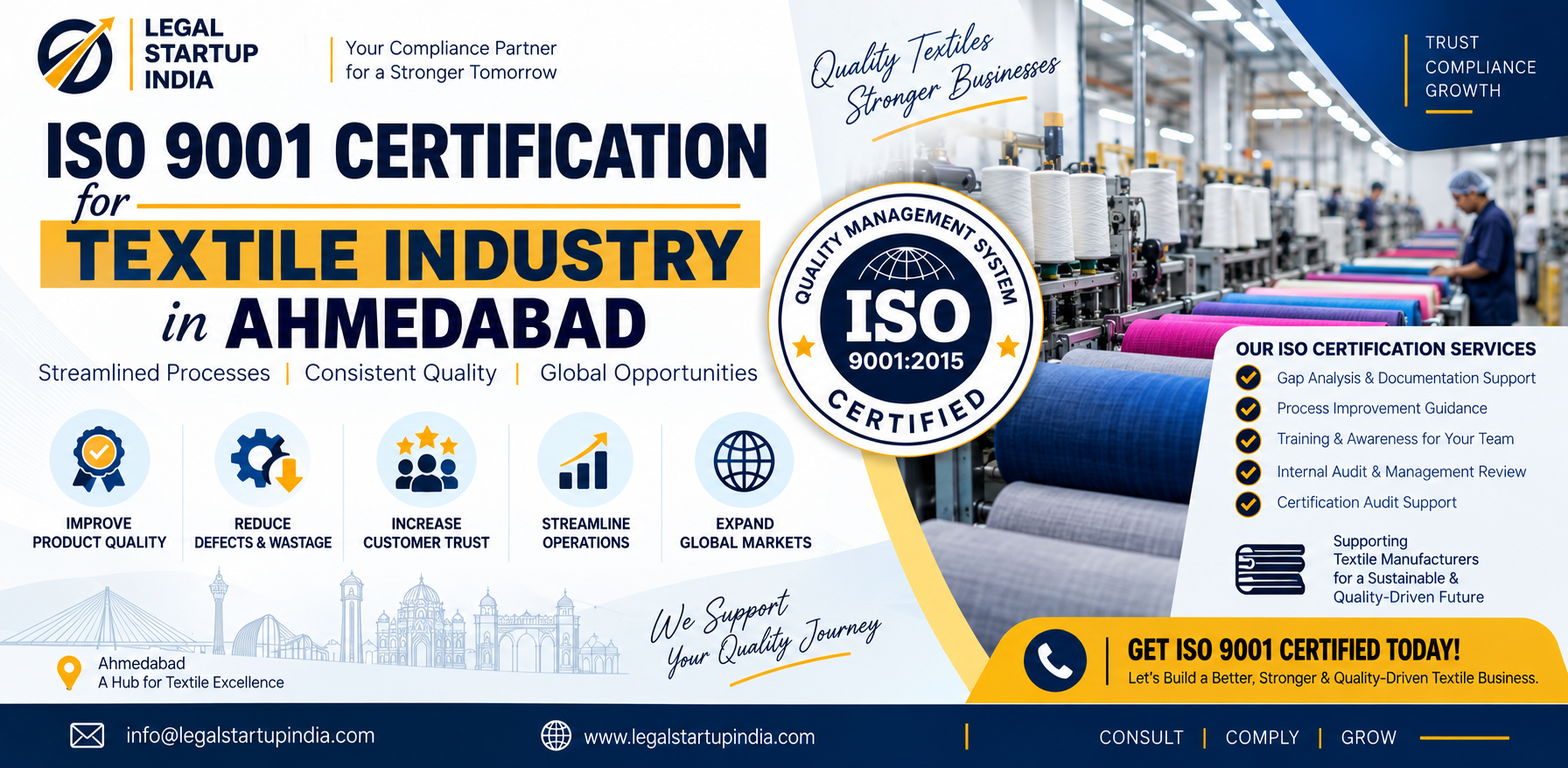 ISO 9001 Certification for Textile Industry in Ahmedabad
 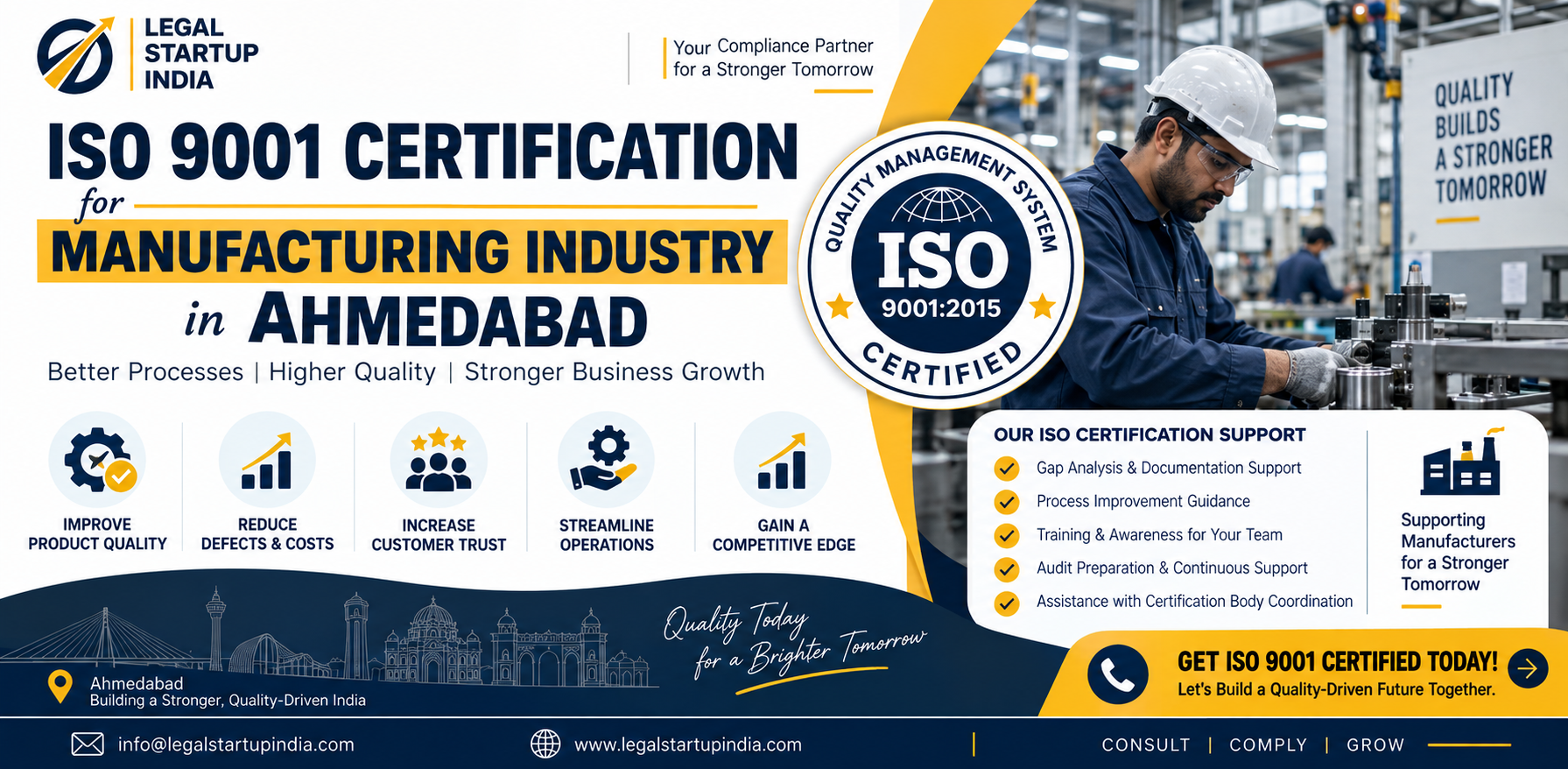 ISO 9001 Certification for Manufacturing Industry in Ahmedabad
  ISO Certification for Pharmaceutical Companies in Ahmedabad
  ISO Certification for Textile Industries in Surat
  ISO Certification for Engineering Companies in Rajkot
  ISO Certification in Gandhinagar