
 10 Oct 2026
Admin ISO
51 Comment
10 Oct 2026
Admin ISO
51 Comment
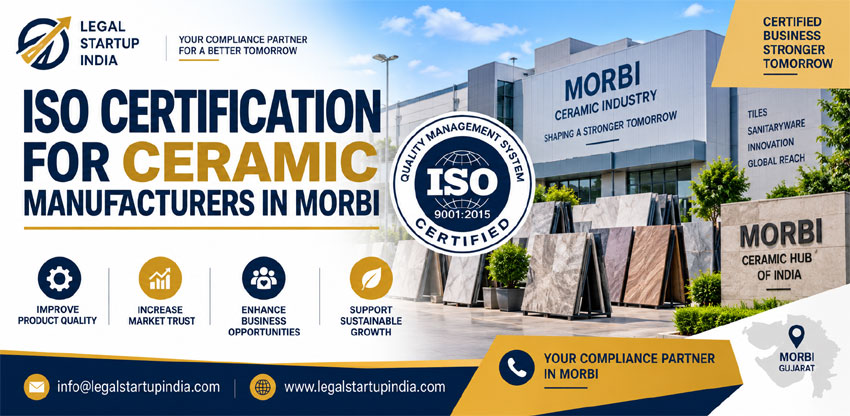
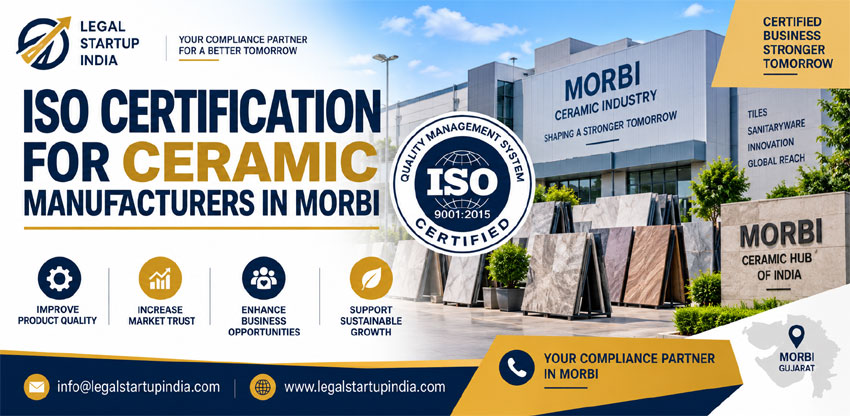
ISO Certification for Ceramic Manufacturers in Morbi
Introduction
Morbi, Gujarat, is one of India's major ceramic manufacturing hubs, known for its ceramic tiles, vitrified tiles, sanitaryware, wall tiles, and other ceramic products. Manufacturers in this competitive market need to maintain consistent product quality, manage production processes efficiently, and meet the expectations of domestic and international buyers.
ISO Certification for Ceramic Manufacturers in Morbi can help businesses establish a structured management system, improve operational controls, and demonstrate their commitment to recognized international standards.
For example, a ceramic tile manufacturer may face challenges such as inconsistent tile dimensions, surface defects, production waste, or customer complaints. A properly implemented quality management system can help identify the causes of these problems, standardize inspection procedures, and improve corrective actions.
ISO certification does not automatically guarantee defect-free products or new business opportunities. However, when supported by effective implementation, it can strengthen a manufacturer's ability to manage quality, document processes, and respond to customer requirements.
Legal Startup India helps businesses understand the ISO certification process, identify relevant standards, prepare documentation, and plan for certification assessments.
Why Do Ceramic Manufacturers in Morbi Need ISO Certification?
Ceramic manufacturers work through several production stages, including raw material preparation, pressing, glazing, firing, finishing, inspection, and packaging. Problems at any stage can affect the final product and increase operating costs.
ISO management systems provide a structured approach to controlling these processes.
Businesses may consider ISO certification for the following reasons:
-
Consistent product quality: Establish clear procedures for production monitoring, inspection, and handling defects.
-
Buyer and supplier requirements: Meet relevant ISO certification requirements specified by customers or procurement teams.
-
Improved production control: Maintain records and review performance to identify recurring production issues.
-
Environmental management: Improve control over environmental aspects associated with manufacturing activities.
-
Workplace safety: Strengthen systems for identifying workplace hazards and managing occupational health and safety risks.
-
Business credibility: Demonstrate conformity with the requirements of an applicable ISO management system standard.
The appropriate certification depends on the manufacturer's activities, customer expectations, and business objectives.
Which ISO Certification Is Suitable for Ceramic Manufacturers?
1. ISO 9001 Certification for Ceramic Manufacturers
ISO 9001 is a widely used quality management system standard. It can help ceramic tile manufacturers, sanitaryware producers, and ceramic component suppliers establish consistent processes.
It supports quality planning, customer satisfaction, process monitoring, corrective actions, and continual improvement.
For example, a manufacturer can use documented inspection procedures to track tile thickness, dimensions, surface finish, and other relevant product characteristics.
2. ISO 14001 Certification for Environmental Management
Ceramic manufacturing may involve energy consumption, emissions, wastewater, dust, and industrial waste. ISO 14001 helps organizations establish a system for managing relevant environmental aspects and improving environmental performance.
It may be particularly relevant to manufacturers seeking better environmental controls or responding to customer sustainability requirements.
3. ISO 45001 Certification for Occupational Health and Safety
Ceramic production facilities may involve heavy machinery, high-temperature kilns, material handling, and exposure to workplace hazards.
ISO 45001 provides a framework for identifying hazards, assessing occupational risks, and improving workplace health and safety management.
4. ISO 50001 Certification for Energy Management
Energy use is an important operational consideration for many ceramic manufacturers, especially facilities that rely on kilns and other energy-intensive equipment.
ISO 50001 helps organizations establish systems to monitor and improve energy performance.
5. ISO/IEC 27001 Certification for Information Security
Manufacturers that manage sensitive customer information, digital production systems, or confidential business data may consider ISO/IEC 27001 when information security is a business priority.
Important: ISO certification requirements vary by standard. Product-specific testing, regulatory compliance, and quality marks may also be necessary depending on the product and applicable requirements.
Why Choose Legal Startup India for ISO Certification?
Choosing the right ISO standard and understanding the documentation process can be difficult for manufacturers already managing production, procurement, quality control, and dispatch operations.
Legal Startup India provides guidance to businesses seeking to understand their certification requirements and prepare for the certification process.
Our Support for Ceramic Manufacturing Businesses
-
Standard selection: Understand which ISO management system standard aligns with your business requirements.
-
Documentation guidance: Identify the policies, procedures, and records relevant to the selected standard.
-
Process understanding: Learn about management system implementation and the stages of certification.
-
Audit preparation: Understand internal audits, management reviews, and corrective actions.
-
Certification coordination: Receive guidance on the documentation and assessment requirements involved in the certification journey.
-
Business-focused assistance: Get support tailored to your manufacturing activities and intended certification scope.
Our aim is to make the process clearer and help your organization prepare in a systematic way.
Certification is issued by the relevant certification body after the applicable assessment and certification decision. It cannot be guaranteed in advance.
Key Benefits of ISO Certification for Ceramic Manufacturers in Morbi
1. Better Quality Management
A structured quality management system helps businesses define responsibilities, monitor production, record inspection results, and address nonconformities.
This can help manufacturers reduce recurring mistakes and improve consistency across production batches.
2. Improved Customer Confidence
Domestic distributors, construction companies, importers, and institutional buyers may evaluate suppliers on quality systems and documented controls.
Relevant ISO certification can support these evaluations when the manufacturer's actual practices match the management system requirements.
3. Reduced Waste and Rework
A manufacturer that tracks defects and investigates their causes can identify opportunities to reduce rejected tiles, unnecessary rework, and material waste.
Results depend on how effectively the system is implemented and maintained.
4. Better Environmental Controls
ISO 14001 can help businesses identify significant environmental aspects and establish controls suited to their operations.
5. Improved Workplace Safety
ISO 45001 supports systematic hazard identification, risk assessment, employee awareness, and ongoing improvement in occupational health and safety management.
6. Support for Business Expansion
Some buyers, tenders, and supply agreements specify particular ISO certifications. Obtaining the required certification may help a manufacturer satisfy those conditions, although it does not guarantee contract awards or export approvals.
Step-by-Step ISO Certification Process for Ceramic Manufacturers in Morbi
Step 1: Identify Your Business Requirements
Decide why your organization needs certification. The objective could be improving quality management, satisfying a buyer's requirement, managing environmental impacts, or strengthening workplace safety.
Step 2: Select the Appropriate ISO Standard
Choose a standard that matches your business goals and operations. For many ceramic manufacturers, ISO 9001 is a starting point for quality management, while other standards may address additional needs.
Step 3: Define the Certification Scope
Identify the products, processes, locations, and activities that will fall within the management system's scope.
A clearly defined scope helps avoid confusion during documentation and assessment.
Step 4: Review Existing Processes
Evaluate your current production controls, inspection procedures, employee responsibilities, records, and management practices against the applicable standard.
Identify areas that require improvement.
Step 5: Prepare Documentation
Develop or update the necessary policies, procedures, risk assessments, inspection records, and other documented information relevant to the selected standard.
Step 6: Implement the Management System
Put the documented processes into practice. Train relevant employees, maintain required records, and monitor performance.
For a tile manufacturer, this could involve maintaining inspection records and documenting corrective actions for recurring surface defects.
Step 7: Conduct Internal Audits
Review whether the management system is implemented effectively and meets the relevant requirements. Address identified nonconformities before the certification assessment.
Step 8: Complete the Certification Audit
A suitable certification body evaluates the management system against the selected ISO standard. The audit arrangements depend on the standard, the certification scope, and the organization's circumstances.
Step 9: Close Nonconformities and Obtain Certification
Address any audit findings in accordance with the certification body's requirements. Certification is granted only after the required conditions have been satisfied and the certification decision has been approved.
After certification, continue maintaining the system and completing applicable surveillance and recertification audits.
Documents Required for ISO Certification
The exact documentation depends on the chosen ISO standard, company structure, and manufacturing activities. Commonly requested information may include:
-
Company registration certificate or other applicable business registration documents
-
PAN and relevant business identification details
-
GST registration certificate, where applicable
-
Factory or business address and contact details
-
Description of manufacturing activities and product categories
-
Organizational structure and employee details
-
Quality, environmental, or safety policy, as applicable
-
Relevant procedures, work instructions, and operational records
-
Product inspection and quality control records, where relevant
-
Risk assessments and operational controls, where required
-
Internal audit and management review records, where applicable
-
Records of corrective actions and management system implementation
-
Additional documents required by the selected standard or certification body
Not every document is mandatory for every business. The final checklist should be prepared according to the applicable standard and the actual scope of operations.
Cost of ISO Certification for Ceramic Manufacturers in Morbi
The cost of ISO certification varies from one manufacturer to another. There is no single fixed price that applies to every ceramic manufacturing unit.
The quotation may depend on:
-
The selected ISO standard
-
Company size and employee count
-
Complexity of manufacturing processes
-
Number of sites included in the certification scope
-
Existing documentation and implementation readiness
-
Certification body fees and audit requirements
-
Additional support required for documentation and implementation
To obtain a suitable quotation, share your manufacturing activities, company size, preferred ISO standard, and certification scope.
Before proceeding, confirm the certification body's credentials, the scope covered by the certificate, the services included in the quotation, and any additional audit or renewal fees.
Frequently Asked Questions
1. Which ISO certification is best for ceramic manufacturers in Morbi?
ISO 9001 is a common choice for ceramic manufacturers seeking to improve quality management and process consistency. ISO 14001, ISO 45001, and ISO 50001 may also be relevant depending on environmental, safety, and energy management objectives.
2. How can ceramic tile manufacturers in Morbi apply for ISO certification?
Manufacturers should identify the applicable standard, define the certification scope, review existing processes, prepare documentation, implement the management system, conduct internal audits, and complete the certification body's assessment.
3. What documents are required for ISO certification in the ceramic industry?
Common requirements include business registration details, company information, manufacturing process information, relevant policies and procedures, and applicable operational records. The exact list depends on the selected standard and certification scope.
4. How long does ISO certification take for a ceramic manufacturing company?
The timeline depends on the standard, company size, process complexity, documentation readiness, audit arrangements, and closure of nonconformities. An appropriate estimate can be provided after reviewing the organization's requirements.
5. Is ISO certification mandatory for ceramic manufacturers in Morbi?
ISO certification is not universally mandatory for every ceramic manufacturer. However, particular buyers, tenders, contracts, or applicable requirements may specify certain certifications. Manufacturers should verify the requirements relevant to their products and markets.
Conclusion: Get ISO Certification Guidance for Your Ceramic Business
Morbi's ceramic industry operates in a competitive market where product consistency, reliable processes, customer confidence, and responsible manufacturing practices matter.
ISO Certification for Ceramic Manufacturers in Morbi can help businesses establish a structured management system and demonstrate conformity with a recognized standard. The key is to select the appropriate certification, implement the required processes, and prepare properly for assessment.
Legal Startup India can guide you in understanding the certification requirements, documentation, and next steps for your ceramic manufacturing business.
Take the next step toward ISO certification.
Contact Legal Startup India to discuss your requirements and obtain guidance for your business.
Email: info@legalstartupindia.com
Website: https://www.legalstartupindia.com/
 ISO Certification for Brass Industries in Jamnagar
  ISO Certification for Ceramic Manufacturers in Morbi
  ISO Certification for Chemical Industries in Ankleshwar
  ISO Certification in Odhav GIDC
  ISO Certification in Jamnagar
 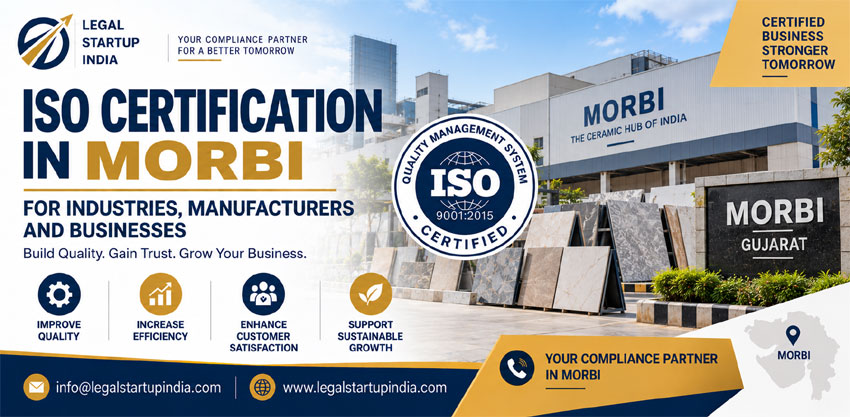 ISO Certification in Morbi
  ISO Certification in Vapi
  ISO Certification in Ankleshwar
  ISO Certification in Bharuch
  ISO 9001 Certification for Logistics Companies in Ahmedabad