
 18 Nov 2026
Admin ISO
51 Comment
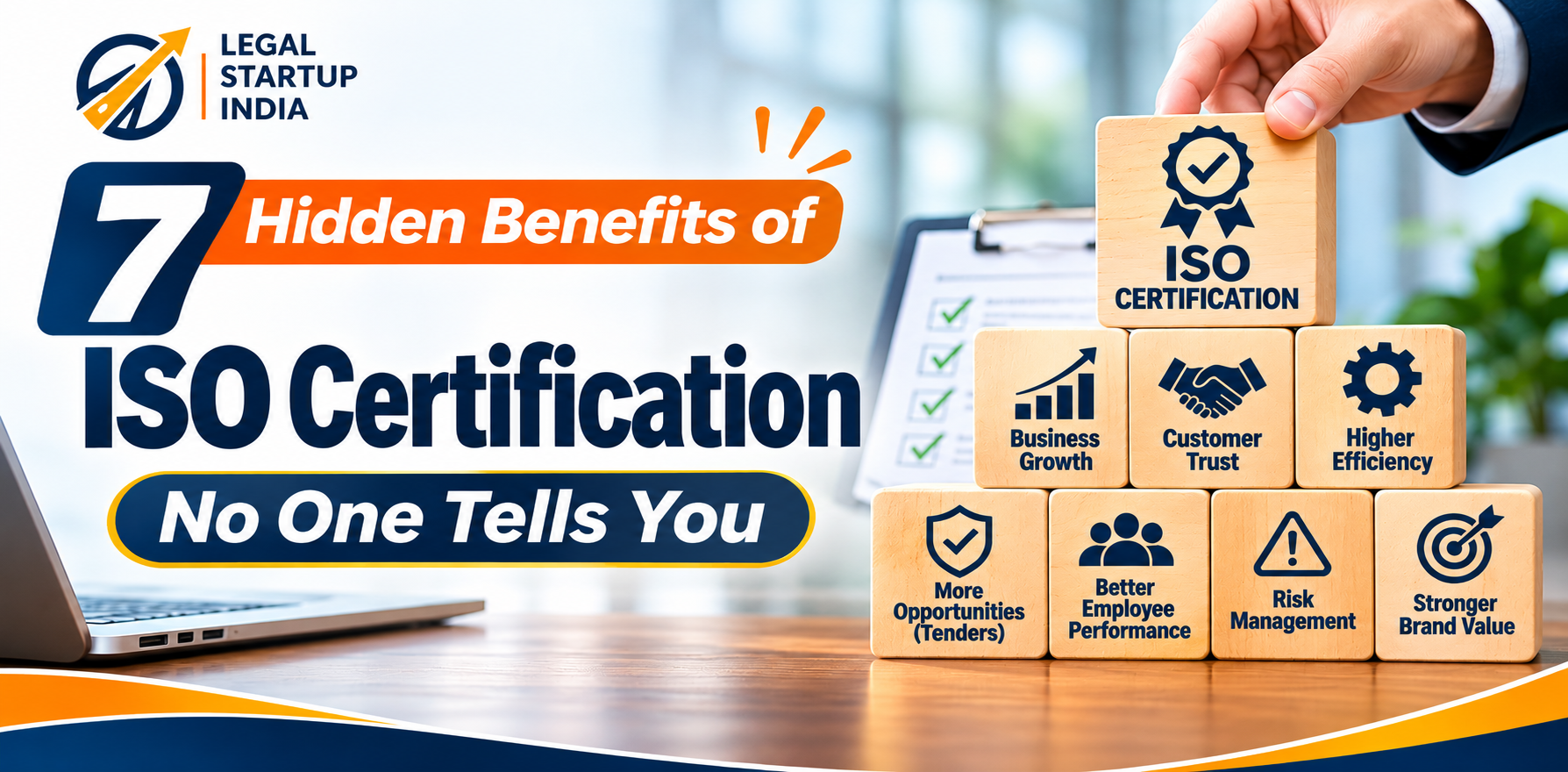
7 Hidden Benefits of ISO Certification No One Tells You
Introduction
Many Indian business owners consider ISO certification simply a document required for government tenders, customer approvals or business registrations. However, its actual value goes much deeper.
ISO certification can help businesses improve their internal processes, build customer confidence, reduce operational mistakes and establish a professional business image.
Whether you operate a manufacturing company in Delhi, a service business in Mumbai, a startup in Bengaluru or a small enterprise in Haryana, implementing an appropriate ISO management system can create long-term business value.
The benefits of ISO certification are not limited to large corporations. Small businesses, MSMEs, startups, manufacturers and service providers can also benefit from internationally recognised management standards.
Let's explore seven lesser-known advantages of ISO certification that can make a real difference to your business.
7 Hidden Benefits of ISO Certification for Businesses
1. Better Business Efficiency and Reduced Operational Costs
One of the most valuable but often overlooked benefits of ISO certification is improved operational efficiency.
ISO management systems encourage businesses to establish clear procedures, assign responsibilities and monitor their daily activities.
For example, a manufacturing company in Faridabad may experience production delays because employees follow different working methods. By implementing an ISO 9001 Quality Management System, the company can standardise its production procedures, maintain records and monitor quality at different stages.
This can help businesses:
-
Reduce repeated mistakes and unnecessary rework.
-
Improve employee productivity.
-
Minimise material wastage.
-
Establish clear responsibilities.
-
Improve overall workflow management.
Over time, better processes can contribute to lower operating costs and improved profitability.
2. Increased Customer Trust and Business Credibility
Customers want to work with businesses that maintain consistent quality and follow professional practices.
An appropriate ISO certification demonstrates that a company has implemented a management system designed to meet defined international standard requirements.
For example, when an Indian manufacturer approaches a new international buyer, having an applicable ISO 9001 certificate may strengthen its business profile during supplier evaluation.
It can help communicate:
-
Commitment to quality management.
-
Structured business operations.
-
Focus on customer satisfaction.
-
Continuous improvement practices.
-
A professional approach to business management.
ISO certification does not automatically guarantee customer satisfaction, but it can provide additional confidence to potential customers and business partners.
3. Better Opportunities in Government Tenders and Corporate Contracts
This is one of the most commercially important benefits of ISO certification.
Many government departments, public sector organisations and large private companies specify particular quality or management system certifications in their tender documents or supplier qualification requirements.
For example, an engineering company participating in an infrastructure tender may find that ISO 9001 certification is listed as an eligibility or evaluation requirement.
Having the relevant certification can help businesses:
-
Meet specified tender eligibility conditions.
-
Strengthen vendor registration applications.
-
Improve supplier evaluation profiles.
-
Participate in relevant corporate procurement opportunities.
-
Build confidence with institutional buyers.
Important: ISO certification does not guarantee tender approval or contract allocation. Always check the specific tender requirements before applying.
4. Improved Employee Performance and Accountability
A business cannot grow consistently without an organised workforce.
ISO management systems encourage companies to define employee responsibilities, provide appropriate training and establish documented working procedures.
Consider a growing IT company in Noida where different employees handle customer complaints without a common process. This may result in delayed responses and inconsistent service.
By introducing standard operating procedures (SOPs), assigning responsibilities and monitoring performance, the company can create a more organised working environment.
The benefits include:
-
Better coordination between departments.
-
Clearly defined employee responsibilities.
-
Improved staff training.
-
Reduced confusion in daily operations.
-
Better understanding of performance expectations.
This can improve workplace discipline and make business operations easier to manage.
5. Easier Business Expansion and International Market Readiness
Businesses planning to expand into new cities, work with international buyers or enter larger supply chains often need to demonstrate that their operations follow recognised management practices.
ISO certification can support this process by providing an established framework for managing quality, environmental responsibilities, information security or other business requirements.
For example, an Indian electronics manufacturer planning to supply products to overseas companies may benefit from implementing an appropriate quality management system.
Depending on the industry and buyer requirements, relevant standards may include:
-
ISO 9001: Quality Management System.
-
ISO 14001: Environmental Management System.
-
ISO 45001: Occupational Health and Safety Management System.
-
ISO/IEC 27001: Information Security Management System.
-
ISO 22000: Food Safety Management System.
The right standard depends on your business activities, risks and customer expectations.
6. Better Risk Management and Fewer Business Disruptions
Unexpected problems can affect business operations, customer relationships and profitability.
ISO management systems encourage organisations to identify potential risks, establish controls and review their effectiveness.
For example, a food processing company may identify risks related to raw material quality, supplier reliability, hygiene and product handling.
An appropriate management system helps the organisation establish procedures to monitor and manage these areas.
This approach can help businesses:
-
Identify operational risks earlier.
-
Improve supplier evaluation.
-
Maintain important business records.
-
Establish corrective action procedures.
-
Reduce the possibility of recurring problems.
A well-implemented management system can make business operations more predictable and resilient.
7. Stronger Brand Positioning Against Competitors
In competitive Indian markets, businesses need more than attractive pricing to win customers.
Professional processes, consistent service and recognised management practices can help differentiate a company from competitors.
For instance, when two suppliers offer similar products at comparable prices, a buyer may consider the supplier with stronger quality management practices and relevant certifications.
ISO certification can therefore support your brand positioning by communicating your commitment to structured business management.
It may be particularly useful for:
-
MSMEs competing with established companies.
-
Startups approaching corporate customers.
-
Manufacturers seeking new distributors.
-
Service providers registering as vendors.
-
Businesses developing international partnerships.
However, certification should support genuine business improvements rather than being used only as a marketing symbol.
Why Choose Legal Startup India for ISO Certification?
Selecting the right ISO certification guidance provider is an important step towards building a reliable management system.
At Legal Startup India, we help businesses understand their applicable certification requirements and navigate the ISO certification process.
Our approach focuses on understanding your business activities, identifying the appropriate ISO standard and guiding you through the necessary documentation and certification steps.
Why consider our assistance?
-
Business-oriented guidance: Recommendations based on your business activities and requirements.
-
Standard selection: Assistance in understanding which ISO standard may be suitable for your organisation.
-
Documentation support: Guidance on preparing relevant management system documents.
-
Certification process assistance: Support throughout the application and audit preparation stages.
-
Suitable for different businesses: Assistance for startups, MSMEs, manufacturers and service providers.
Our objective is to make the certification journey easier to understand and manage.
Step-by-Step ISO Certification Process in India
The ISO certification process generally involves the following steps:
Step 1: Identify the Applicable ISO Standard
Choose the standard according to your business requirements. For example, manufacturers may consider ISO 9001, while food businesses may consider ISO 22000.
Step 2: Understand the Certification Requirements
Review the applicable standard requirements and understand how they relate to your business operations.
Step 3: Prepare Required Documentation
Develop relevant policies, procedures, records and other management system documents.
Step 4: Implement the Management System
Put the documented procedures into practice. Employees should understand their responsibilities and follow the established processes.
Step 5: Conduct an Internal Audit
Review the management system to identify gaps, non-conformities and areas requiring improvement.
Step 6: Certification Audit
An independent certification body evaluates the organisation against the applicable ISO standard.
Step 7: Certification Decision and Certificate Issuance
If the organisation meets the applicable requirements and any identified non-conformities are appropriately addressed, the certification body can make its certification decision and issue the certificate.
Certification is generally maintained through periodic surveillance audits and subsequent recertification.
Documents Required for ISO Certification in India
The documents required depend on the selected ISO standard, business activities and certification scope.
However, businesses are commonly asked to provide the following:
| Document | Purpose |
|---|---|
| PAN Card | Business identification |
| Aadhaar Card | Authorised representative identification, where applicable |
| Business Registration Proof | Establishes legal business identity |
| GST Registration Certificate | Tax registration details, if applicable |
| Business Address Proof | Confirms operating location |
| Company Letterhead | Official business communication |
| Employee Details | Information about the workforce |
| Business Activity Details | Defines the certification scope |
| Process and Quality Documents | Relevant management system documentation |
Additional documents, such as quality policies, environmental procedures, risk assessments, training records and internal audit reports, may be required depending on the selected ISO standard.
Frequently Asked Questions About ISO Certification
1. What are the main benefits of ISO certification for businesses?
The main benefits include improved operational efficiency, better customer confidence, standardised business processes, improved risk management, stronger supplier credibility and potential access to new business opportunities.
2. Is ISO certification beneficial for small businesses and startups?
Yes. ISO certification can help small businesses and startups establish professional working procedures, improve internal management and demonstrate their commitment to recognised standards when approaching customers and corporate buyers.
3. Does ISO certification help businesses get government tenders?
ISO certification can help businesses meet specific tender requirements when a particular ISO standard is mentioned in the eligibility criteria. However, certification alone does not guarantee tender approval or contract allocation.
4. Which ISO certification is best for an Indian business?
The appropriate certification depends on your industry and business objectives. ISO 9001 is commonly used for quality management, ISO 14001 for environmental management, ISO 45001 for occupational health and safety, and ISO/IEC 27001 for information security.
5. How long does it take to obtain ISO certification in India?
The timeline depends on the selected standard, company size, operational complexity, documentation readiness and audit requirements. Smaller organisations with prepared management systems may complete the process more quickly than businesses requiring significant implementation work.
Conclusion: Turn ISO Certification into a Business Growth Opportunity
ISO certification should not be viewed simply as a certificate to display on your office wall. When properly implemented, it can help businesses improve operational efficiency, build customer confidence, strengthen internal processes and prepare for new business opportunities.
From startups and MSMEs to established manufacturing and service companies, the right ISO management system can contribute to sustainable business development.
If you are planning to obtain ISO certification for your business, choosing the appropriate standard and following the correct certification process is essential.
Get professional ISO certification assistance from Legal Startup India.
Contact our team to understand your certification requirements and take the next step towards building a more organised and credible business.
Email: info@legalstartupindia.com
Website: https://www.legalstartupindia.com/
Legal Startup India – Supporting businesses with professional registration and certification guidance.
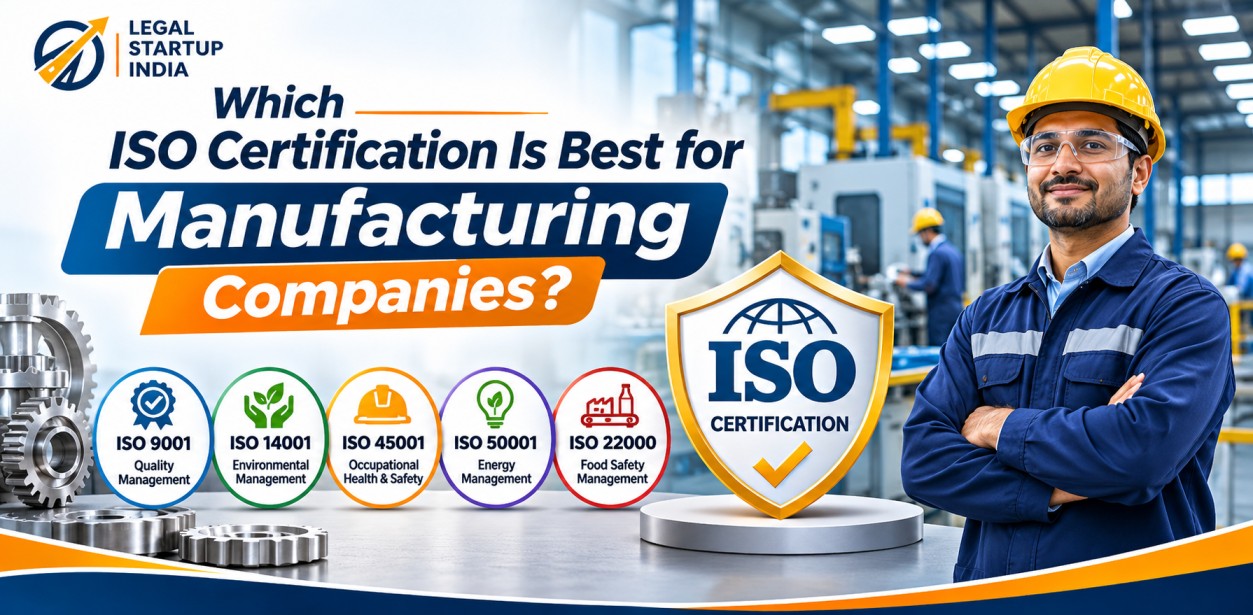 Which ISO Certification Is Best for Manufacturing Companies
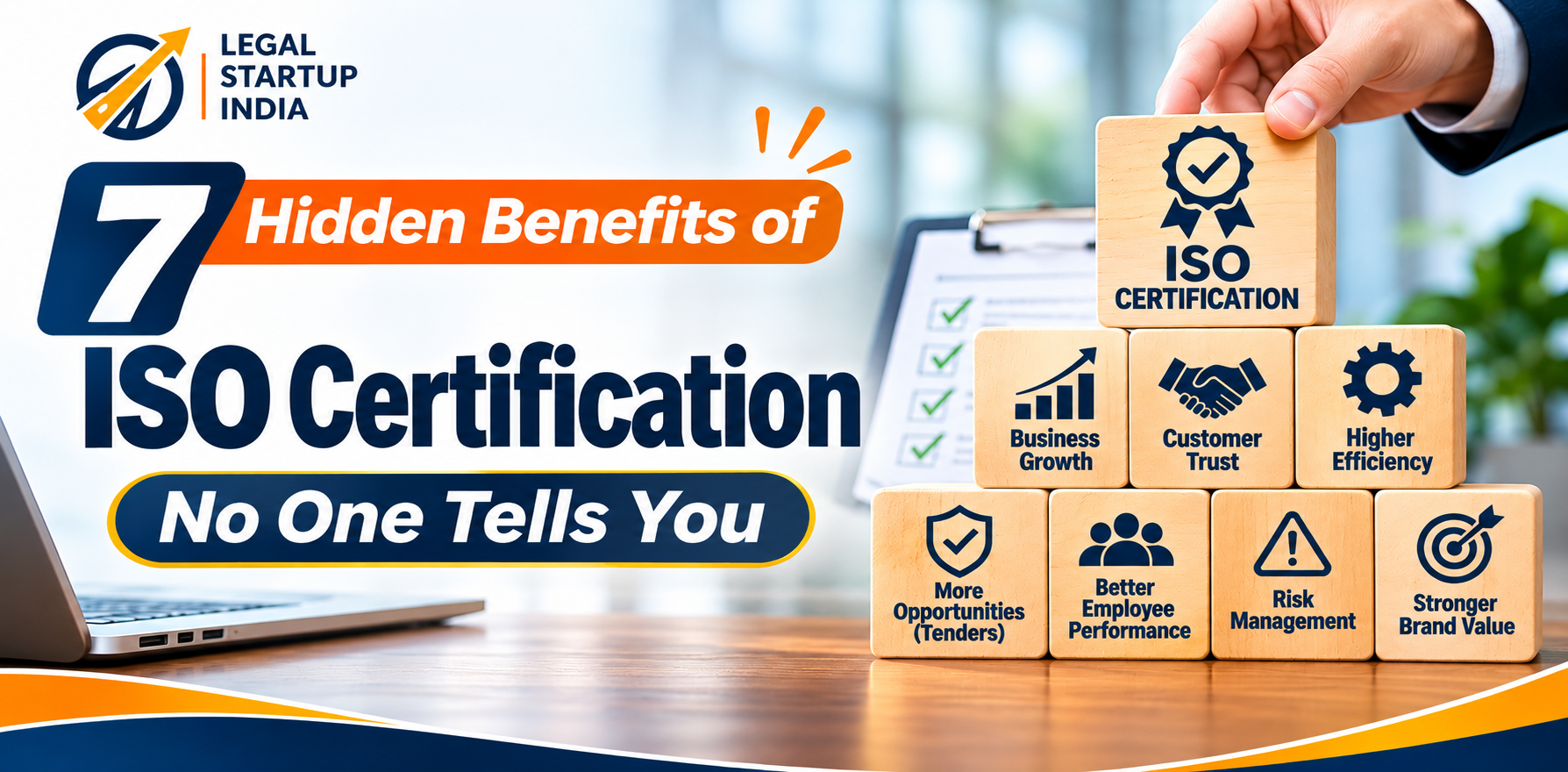 7 Hidden Benefits of ISO Certification No One Tells You
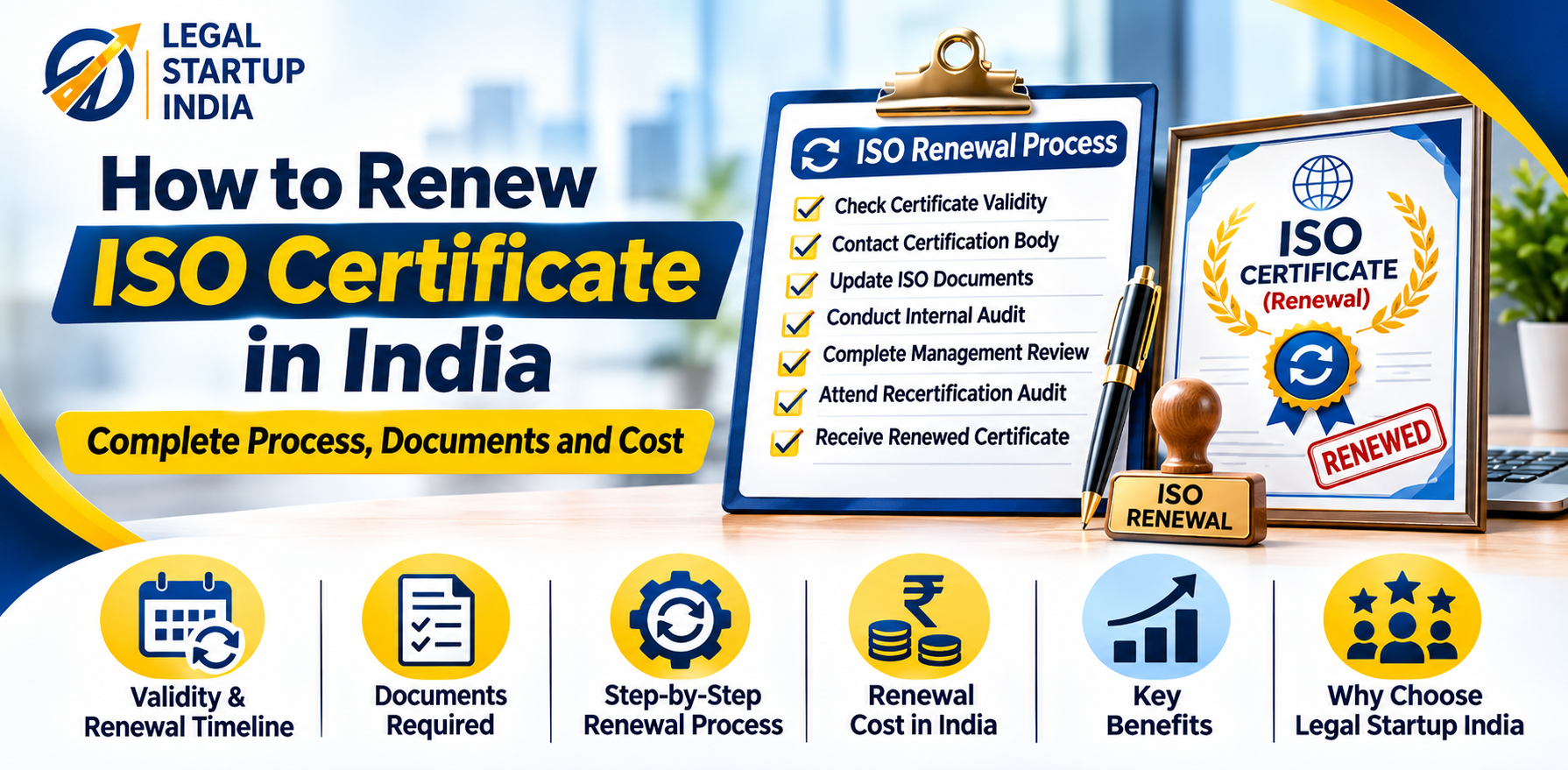 How to Renew ISO Certificate in India
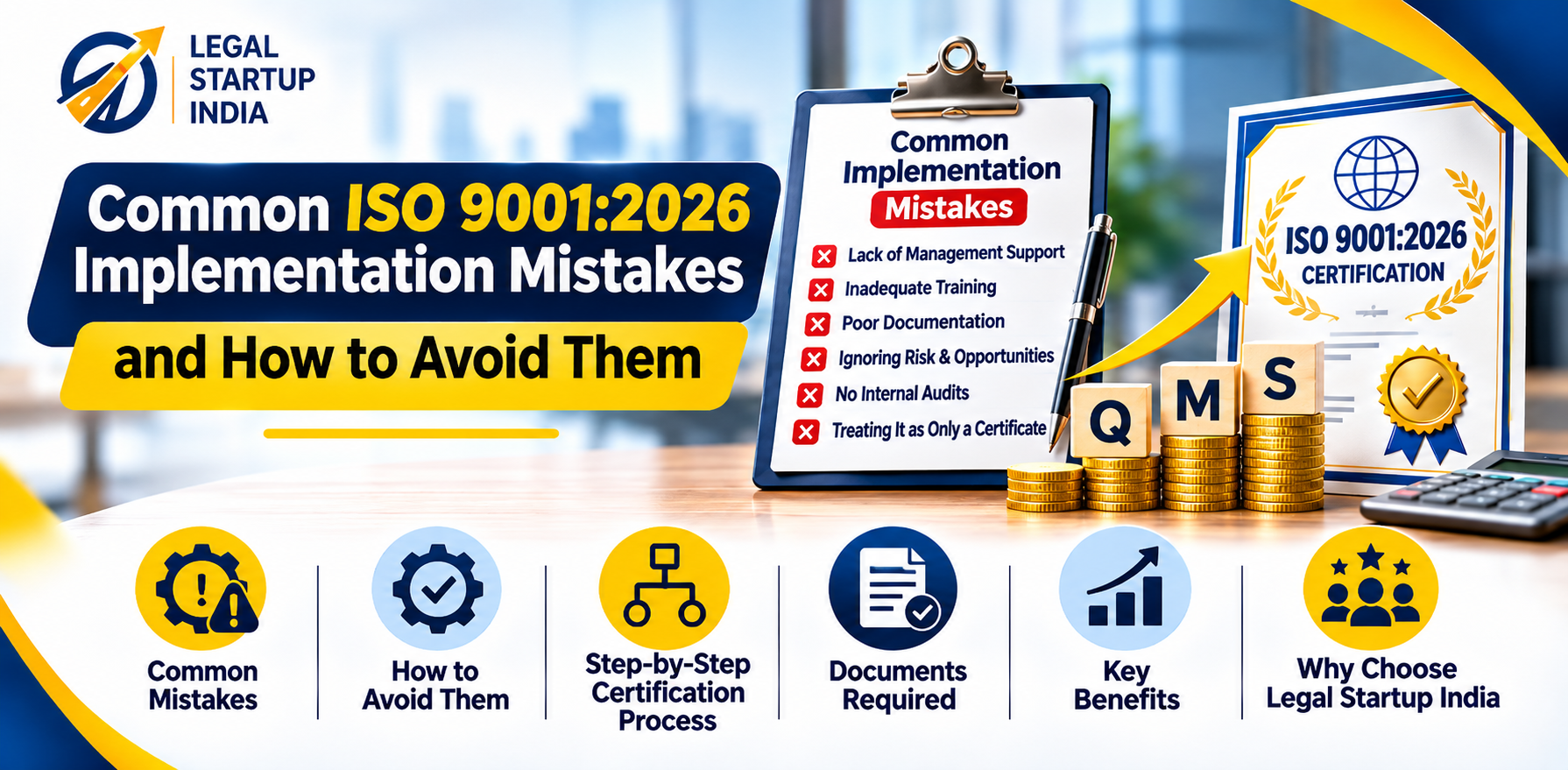 Common ISO 9001 2026 Implementation Mistakes and How to Avoid Them
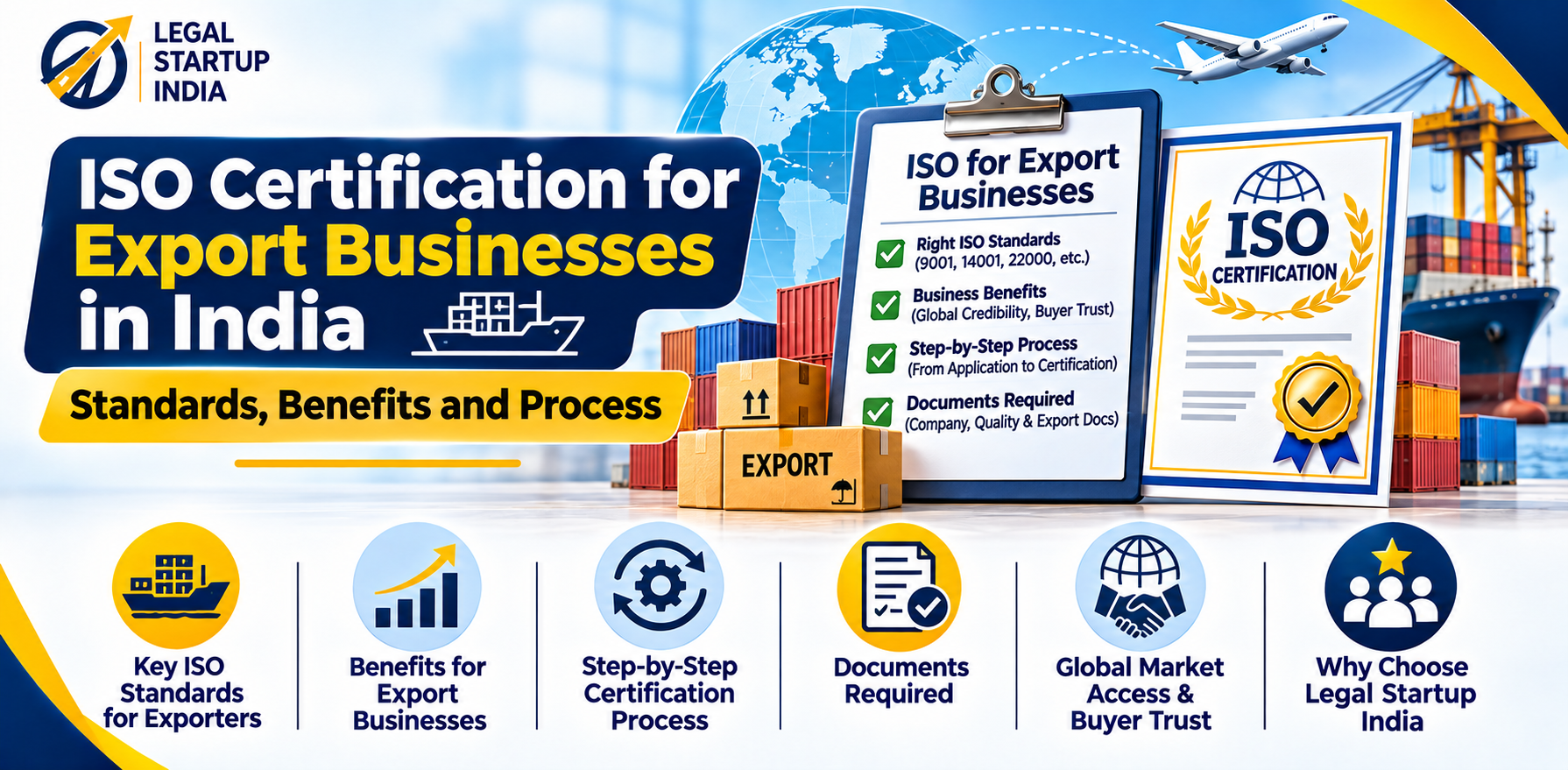 ISO Certification for Export Businesses in India Standards Benefits and Process
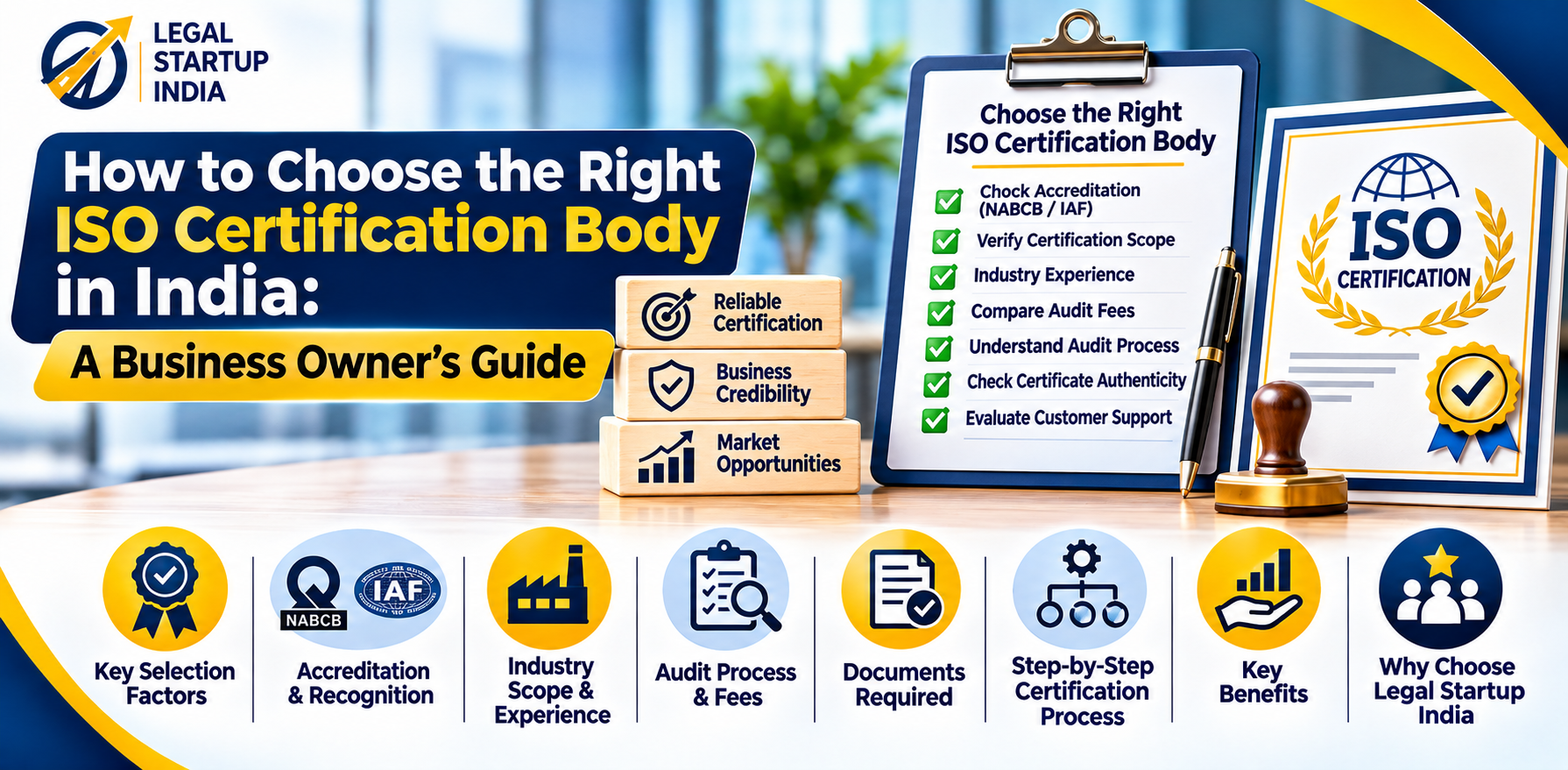 How to Choose the Right ISO Certification Body in India A Business Owners Guide
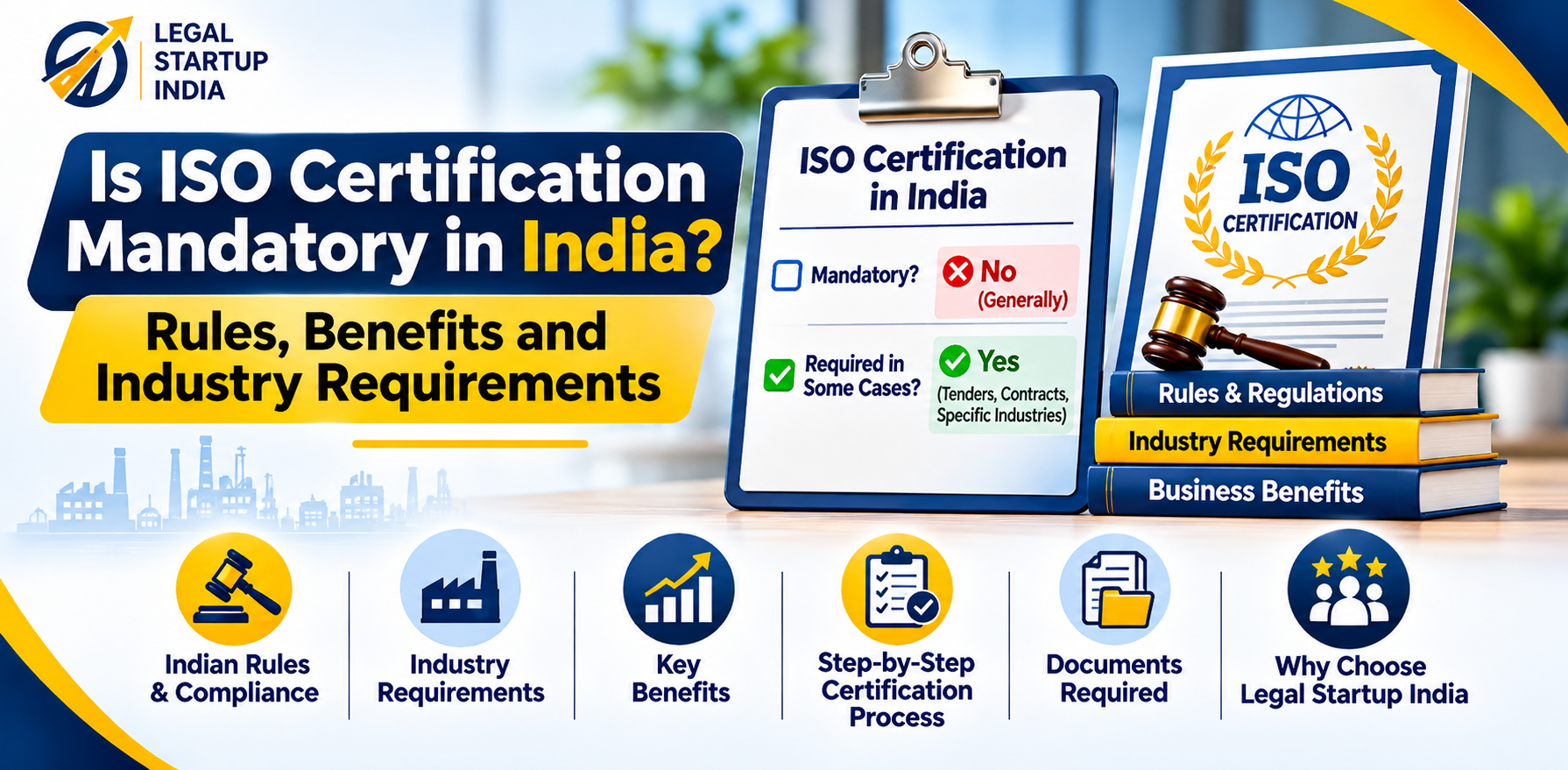 Is ISO Certification Mandatory in India Rules Benefits and Industry Requirements
 ISO Certification Cost in India 2027 Fees Audit Charges and Complete Breakdown
 ISO 9001 2026 vs ISO 9001 2015 Key Differences Changes and Transition Guide
 ISO 9001 2026 vs ISO 9001 2015 What Has Changed