
 09 Nov 2026
Admin ISO
51 Comment
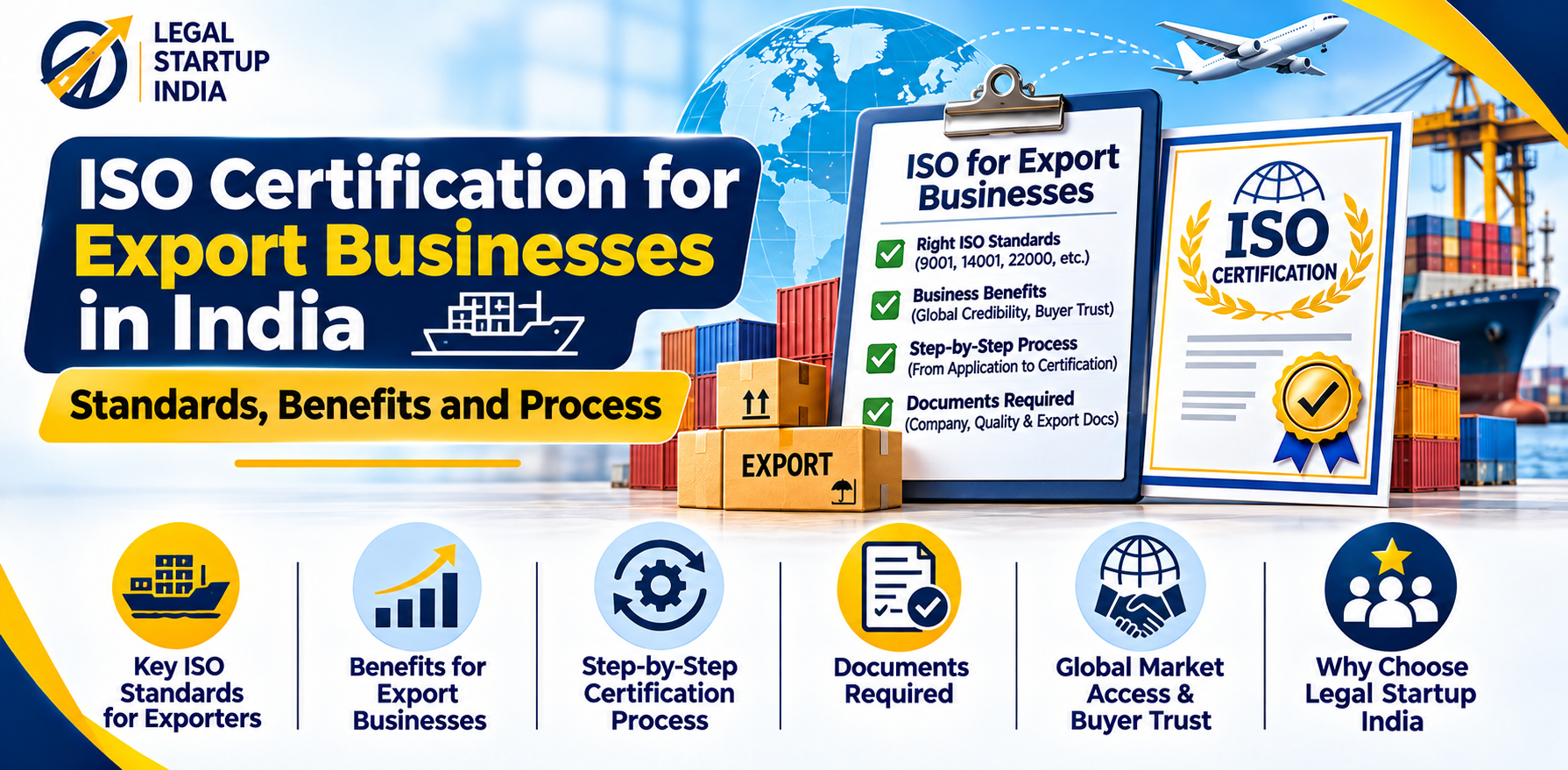
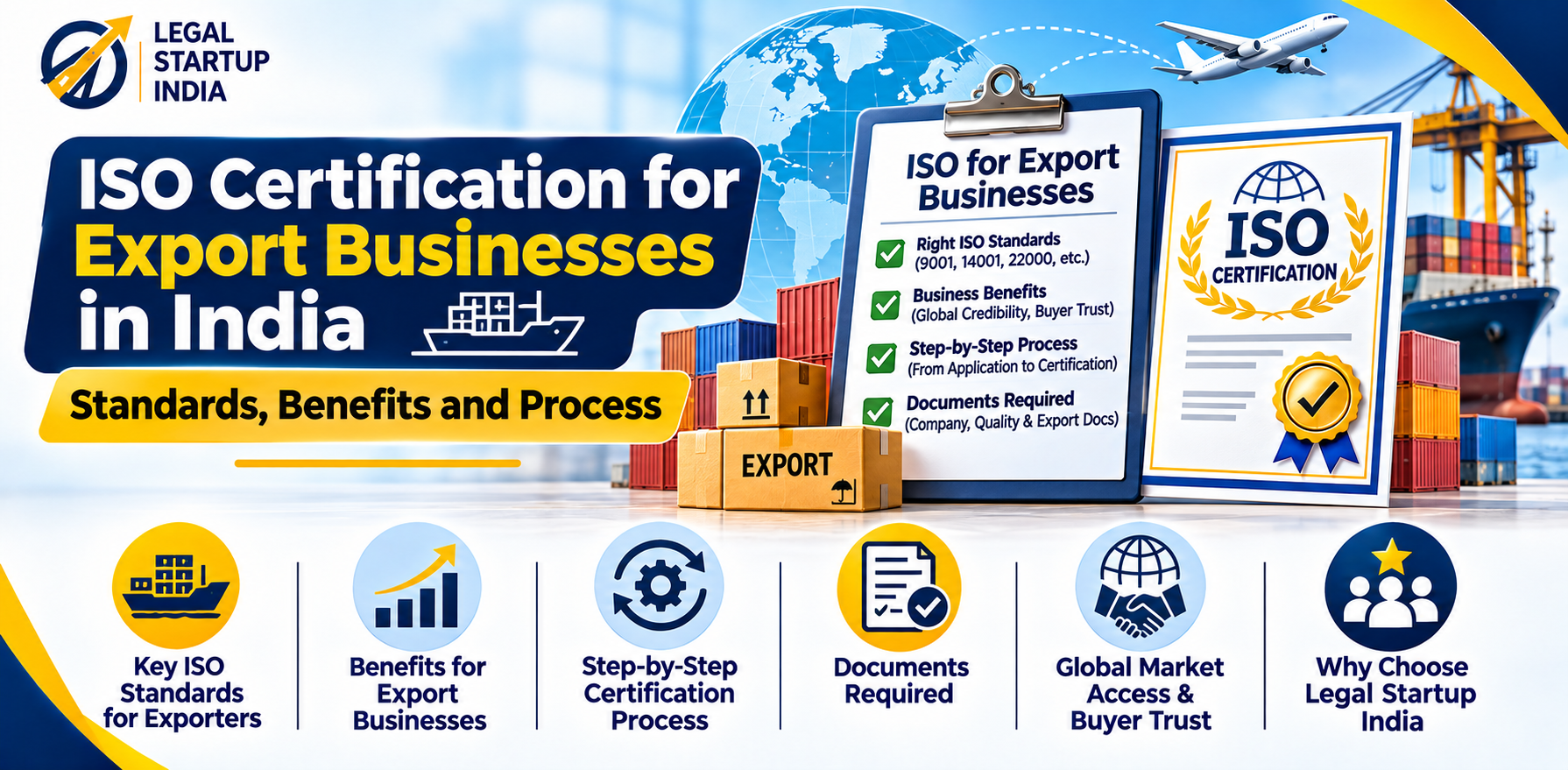
ISO Certification for Export Businesses in India Standards Benefits and Process
Introduction
Expanding into international markets creates exciting opportunities for Indian businesses. However, selling products or services overseas involves more than finding international buyers. Exporters must maintain consistent quality, meet customer expectations and follow the regulations of the countries they serve.
This is where ISO certification for export businesses in India can make a difference.
ISO certification helps organisations establish structured management systems for quality, food safety, environmental performance and information security. It can make an Indian business more attractive to international buyers who expect reliable suppliers and documented processes.
For example, a textile manufacturer in Surat supplying garments to European retailers may use ISO 9001 to improve quality control. Similarly, a food processing company in Punjab may consider ISO 22000 to strengthen its food safety management system.
It is important to understand that ISO certification is not mandatory for every exporter. However, certain buyers, contracts, industry requirements and importing-country regulations may require specific certifications or compliance evidence.
This guide explains the best ISO standards for exporters, their benefits, required documents and the certification process.
What Is ISO Certification for Export Businesses?
ISO certification is an independent assessment that confirms whether an organisation's management system meets the requirements of a particular international standard.
For export businesses, it provides a structured approach to managing quality, operational risks, customer requirements and business processes.
Common ISO standards suitable for Indian exporters include:
1. ISO 9001 – Quality Management System
ISO 9001 is suitable for manufacturers, traders, engineering companies and service exporters.
It helps businesses maintain consistent processes, monitor product quality, manage customer complaints and improve operational performance.
2. ISO 14001 – Environmental Management System
ISO 14001 helps exporters manage environmental responsibilities, reduce waste and improve resource efficiency.
It can be useful for textile, chemical, engineering and manufacturing businesses working with buyers who have environmental expectations.
3. ISO 22000 – Food Safety Management System
ISO 22000 is designed for organisations involved in the food supply chain.
Food processors, manufacturers, packaging companies and exporters can use it to manage food safety hazards and improve control over their operations.
4. ISO 45001 – Occupational Health and Safety Management System
ISO 45001 helps businesses identify workplace hazards and improve employee health and safety.
It can be valuable for manufacturing units, construction companies and industrial exporters.
5. ISO 27001 – Information Security Management System
ISO 27001 is particularly relevant to IT companies, software developers, BPOs and other service exporters handling confidential customer information.
It helps establish controls for protecting business and client data.
Is ISO Certification Mandatory for Export Businesses in India?
No. ISO management system certification is not universally mandatory for exporting goods or services from India.
However, exporters must comply with applicable export laws, product-specific requirements and the regulations of their destination markets.
There are three important situations to understand:
-
Government requirements: Certain products may require specific licences, registrations, inspection certificates or statutory compliance.
-
International buyer requirements: Foreign customers may require ISO 9001, ISO 22000 or another relevant certification before approving a supplier.
-
Industry requirements: Certain export sectors may have additional quality, safety, traceability or environmental expectations.
For example, an Indian engineering company exporting machinery may need to meet the importing country's product safety requirements. Its ISO 9001 certification can demonstrate quality management, but it does not automatically replace mandatory product conformity approvals.
Similarly, food exporters must check applicable FSSAI requirements, export procedures and the importing country's food safety regulations.
Remember: ISO certification supports business credibility, but it does not replace an Importer-Exporter Code (IEC), export licence, product approval or other mandatory export documentation.
Key Benefits of ISO Certification for Indian Exporters
Obtaining the appropriate ISO certification can help exporters compete more effectively in international markets.
1. Builds International Buyer Confidence
Foreign buyers often want evidence that suppliers follow organised quality and management processes. ISO certification can help demonstrate this commitment.
2. Improves Product and Service Consistency
ISO 9001 encourages businesses to monitor processes, reduce errors and maintain consistent quality.
For example, an auto component manufacturer in Pune can use documented inspection procedures to improve consistency across export orders.
3. Supports International Supplier Qualification
Some international companies include ISO certification in their vendor approval process. Having the required certification can help exporters meet these contractual conditions.
4. Improves Operational Efficiency
Standardised processes can reduce material wastage, production delays, rework and unnecessary operating expenses.
5. Strengthens Food Safety and Product Confidence
ISO 22000 helps food exporters establish food safety controls, identify hazards and maintain better process monitoring.
6. Supports Long-Term Business Growth
A well-implemented management system helps businesses prepare for larger orders, new customers and more complex international supply chains.
Step-by-Step ISO Certification Process for Export Businesses in India
Indian exporters can follow these steps to obtain the appropriate ISO certification.
Step 1: Identify the Right ISO Standard
Choose the standard based on your export products, services and buyer requirements.
For example, a food exporter may consider ISO 22000, while an IT exporter may consider ISO 27001.
Step 2: Define the Certification Scope
Identify the business activities, locations, departments and processes that will be covered by certification.
Step 3: Submit the Application
Provide your company information, business activities, employee strength and proposed certification scope.
Step 4: Conduct a Gap Analysis
Review existing business processes and identify improvements needed to meet the selected ISO standard.
Step 5: Prepare Required Documentation
Develop relevant policies, procedures, risk assessments, quality records and other documented information.
Step 6: Implement the Management System
Apply the required procedures in daily operations and train employees to understand their responsibilities.
Step 7: Conduct an Internal Audit
Review the implemented system, identify non-conformities and complete corrective actions before the external audit.
Step 8: Complete the Certification Audit
An independent certification body evaluates whether your management system meets the applicable requirements.
Step 9: Certification Decision and Issuance
After successful audit completion and closure of required findings, the certification body can issue the certificate.
Documents Required for ISO Certification for Export Businesses
The documents required depend on the ISO standard, export activity and organisation's operational complexity.
Common documents include:
-
Company incorporation or business registration certificate.
-
PAN card of the organisation.
-
GST registration certificate, where applicable.
-
Importer-Exporter Code (IEC), where applicable.
-
Business address proof.
-
Company profile and export activity details.
-
Employee details and organisational structure.
-
Quality or relevant management system policy.
-
Management system objectives.
-
Process procedures and work instructions, where applicable.
-
Risk assessment and control records.
-
Employee training and competency records.
-
Internal audit reports.
-
Management review records.
-
Corrective action and improvement records.
Depending on the export product, additional documents such as inspection certificates, health certificates, phytosanitary certificates, certificates of origin or export licences may also be required.
Why Choose Legal Startup India?
Choosing the right ISO certification support provider can make the certification journey easier, especially for businesses entering international markets for the first time.
Legal Startup India assists Indian exporters, manufacturers, startups and MSMEs in understanding ISO requirements and preparing their management systems.
Our support includes:
-
Guidance on selecting the appropriate ISO standard.
-
Assistance with certification application requirements.
-
Quality management documentation support.
-
Management system implementation guidance.
-
Internal audit preparation.
-
Certification audit coordination.
-
Guidance for exporters and manufacturing businesses.
-
Support for understanding certification and compliance requirements.
Our objective is to help businesses understand the certification process and prepare for credible, independent certification.
Frequently Asked Questions (FAQs)
1. Is ISO certification mandatory for export businesses in India?
No. ISO certification is generally voluntary for Indian exporters. However, international buyers, specific contracts and certain industry requirements may make particular ISO certifications necessary.
2. Which ISO certification is best for export businesses in India?
ISO 9001 is a common choice for exporters because it focuses on quality management. Food exporters may consider ISO 22000, manufacturers may consider ISO 14001, and IT exporters may consider ISO 27001, depending on their business requirements.
3. Is ISO 9001 certification required for international exports?
ISO 9001 is not universally required for international exports. However, some international buyers and supplier agreements specify it as a condition for vendor approval.
4. Can an MSME exporter obtain ISO certification in India?
Yes. MSME exporters can obtain ISO certification. The appropriate standard depends on their business activities, customer requirements and management system needs.
5. Does ISO certification guarantee acceptance in international markets?
No. ISO certification can improve business credibility and demonstrate management system compliance, but it does not guarantee export approval or replace destination-country product regulations, licences and conformity assessments.
Conclusion
ISO certification for export businesses in India can play an important role in improving quality management, building international buyer confidence and strengthening supplier credibility.
Whether you are a food processor in Punjab, a textile exporter in Surat, an engineering manufacturer in Pune or an IT service provider in Bengaluru, the right ISO standard can support your business objectives.
Before applying, identify your buyer requirements, understand the applicable export regulations and select a suitable ISO certification route.
Get ISO Certification Assistance with Legal Startup India
Planning to expand your business into international markets?
Legal Startup India can help you understand suitable ISO standards, documentation requirements and the certification process for your export business.
Contact Legal Startup India
Website: https://legalstartupindia.com/
Email: info@legalstartupindia.com
Connect with our team today to discuss your export business requirements and take the next step towards building a stronger international business presence.
 Which ISO Certification Is Best for Manufacturing Companies
 7 Hidden Benefits of ISO Certification No One Tells You
 How to Renew ISO Certificate in India
 Common ISO 9001 2026 Implementation Mistakes and How to Avoid Them
 ISO Certification for Export Businesses in India Standards Benefits and Process
 How to Choose the Right ISO Certification Body in India A Business Owners Guide
 Is ISO Certification Mandatory in India Rules Benefits and Industry Requirements
 ISO Certification Cost in India 2027 Fees Audit Charges and Complete Breakdown
 ISO 9001 2026 vs ISO 9001 2015 Key Differences Changes and Transition Guide
 ISO 9001 2026 vs ISO 9001 2015 What Has Changed