
 05 Nov 2026
Admin ISO
51 Comment
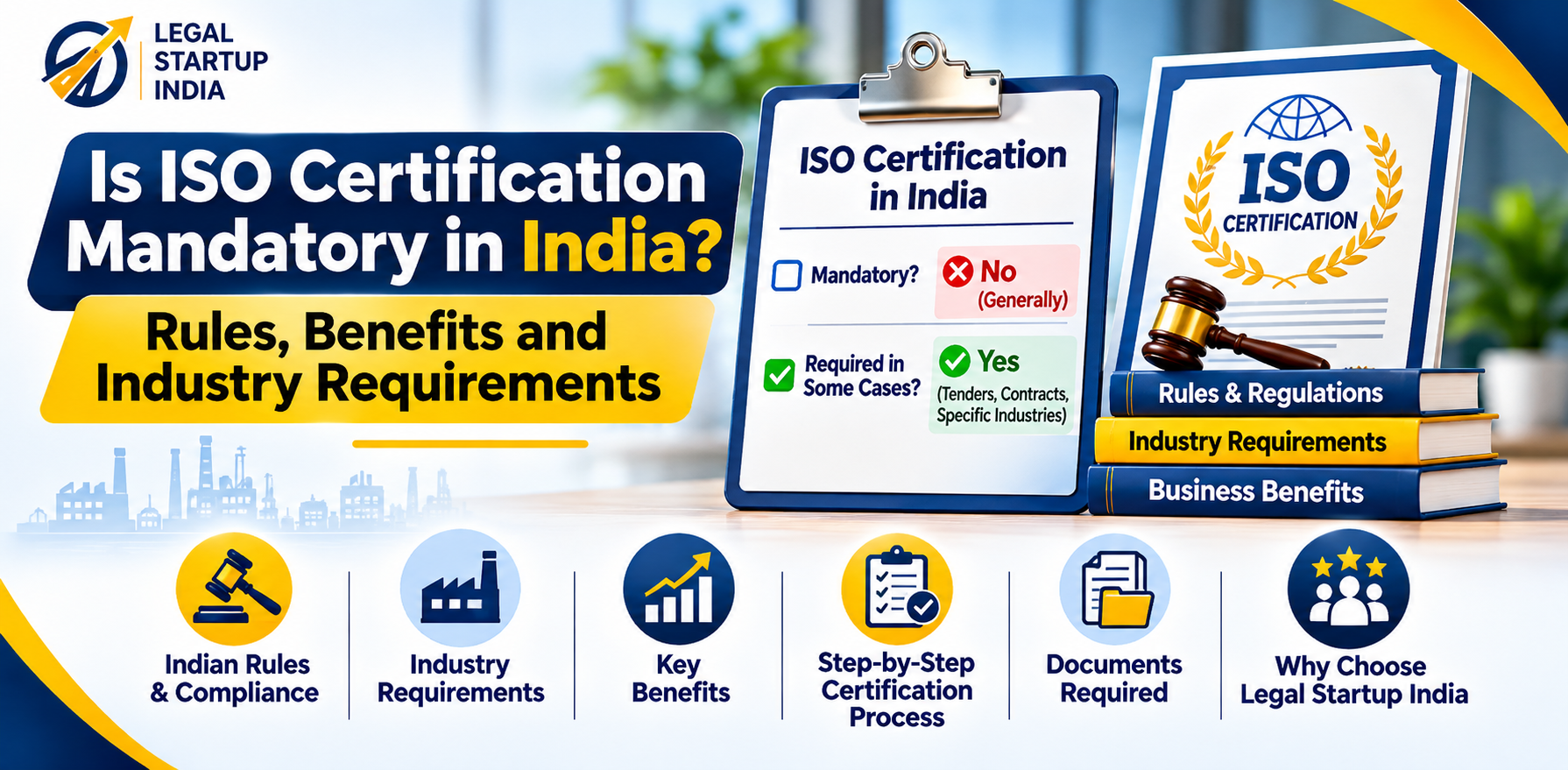
Is ISO Certification Mandatory in India Rules Benefits and Industry Requirements
Introduction
Many Indian business owners believe that obtaining an ISO certificate is compulsory before starting or operating a business. However, this is not entirely correct.
So, is ISO certification mandatory in India?
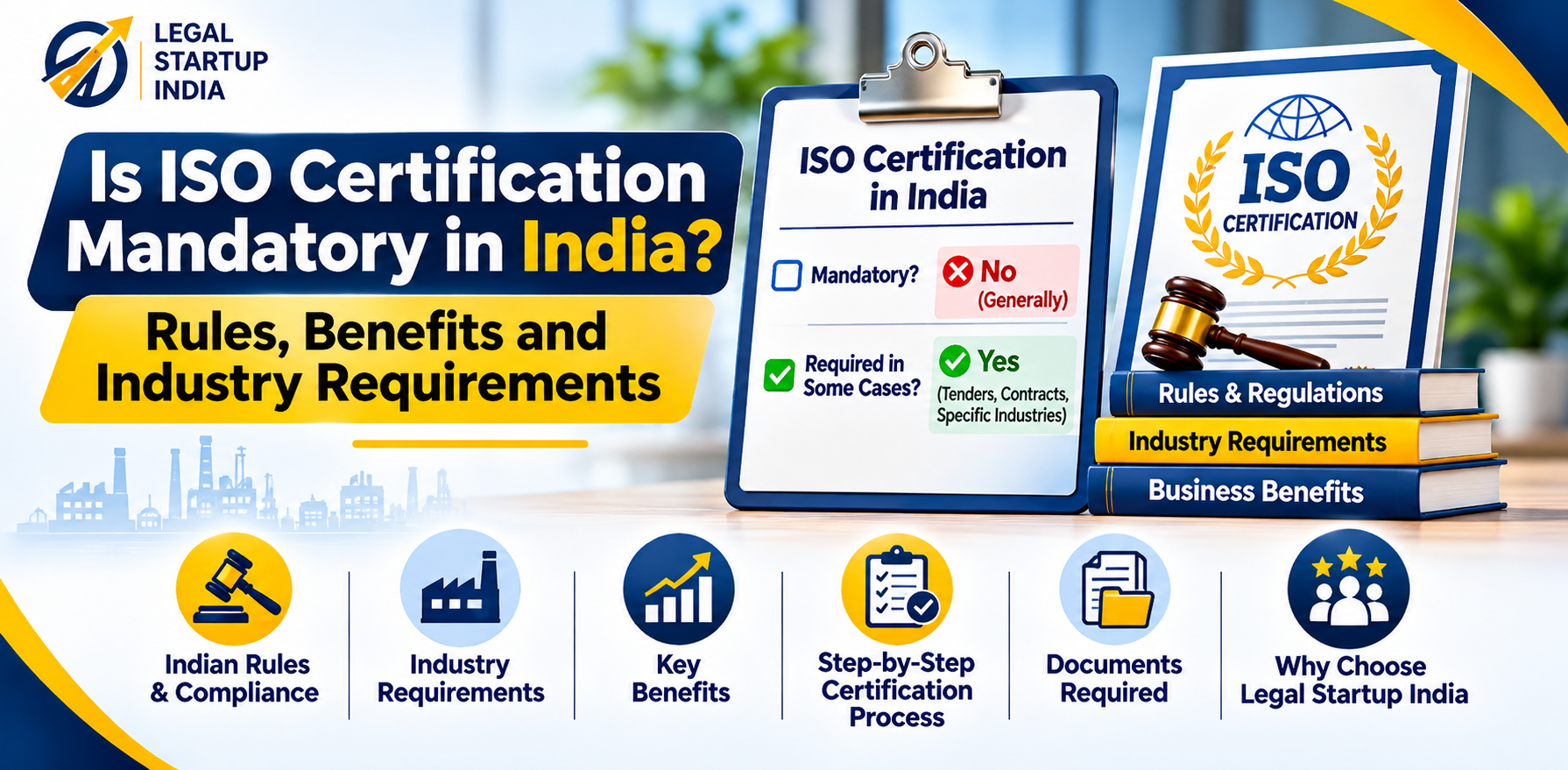
The straightforward answer is No, ISO certification is generally voluntary in India. Most businesses are not legally required to obtain ISO 9001 or other ISO management system certifications simply to operate.
However, there are situations where ISO certification or compliance with specific quality standards becomes necessary. These may include government tenders, customer contracts, industry-specific regulations and product-related Quality Control Orders (QCOs).
For example, a manufacturing company in Delhi may operate without ISO 9001 certification, but a particular government tender or corporate customer may require it as an eligibility condition.
Understanding the difference between voluntary ISO certification and legally mandatory industry compliance is important before investing in certification.
This guide explains ISO certification rules in India, industry requirements, business benefits, required documents and the complete certification process.
Is ISO Certification Mandatory in India Under Government Rules?
In general, ISO management system certification is voluntary in India. There is no universal government rule requiring every company, startup, shop or manufacturer to obtain ISO certification.
The Bureau of Indian Standards (BIS) operates various certification schemes. While many are voluntary, the Central Government makes certification compulsory for certain products through applicable Quality Control Orders and other legal provisions.
It is important to understand that BIS product certification and ISO management system certification are different.
For example:
-
ISO 9001 focuses on a company's Quality Management System.
-
BIS certification confirms that a product meets the applicable Indian Standard under the relevant certification scheme.
-
ISO 14001 focuses on environmental management.
-
ISO 27001 focuses on information security management.
Therefore, a business should identify the exact regulatory or contractual requirement instead of assuming that every ISO certificate is legally compulsory.
Which Industries May Require ISO Certification in India?
Although ISO certification is generally voluntary, some industries face specific customer, tender or regulatory requirements.
Here are some common examples.
1. Manufacturing Industry
Manufacturing companies often obtain ISO 9001 certification to demonstrate consistent production processes and quality control.
For example, an automotive component manufacturer in Pune may need ISO 9001 certification to qualify as a supplier for a particular customer.
Certain products may separately require compulsory BIS certification under applicable QCOs.
2. Food and Beverage Industry
Food businesses must comply with applicable Food Safety and Standards Authority of India (FSSAI) licensing and food safety requirements.
ISO 22000 certification is not universally compulsory for every food business. However, food manufacturers, exporters and suppliers may obtain it to demonstrate a structured food safety management system or meet customer requirements.
For example, a packaged food manufacturer in Noida may choose ISO 22000 certification to strengthen food safety controls and build confidence among retail buyers.
3. Healthcare and Medical Device Industry
Healthcare organisations and medical device manufacturers must follow applicable healthcare and product-specific regulations.
Under India's Medical Devices Rules, 2017, manufacturers covered by the relevant provisions must establish and maintain an appropriate Quality Management System.
ISO 13485 can provide a recognised framework for medical device quality management, but businesses should distinguish the applicable statutory QMS requirements from a blanket legal requirement to hold an ISO 13485 certificate.
4. Information Technology and Software Industry
IT companies, software developers and data service providers often obtain ISO 27001 certification to demonstrate information security management.
It can be particularly useful when working with international clients, financial institutions and organisations handling sensitive information.
However, ISO 27001 certification is not automatically compulsory for every IT company in India. Specific contractual or regulatory requirements must be checked separately.
5. Construction and Infrastructure Industry
Construction companies and infrastructure contractors may require ISO 9001, ISO 14001 or ISO 45001 to meet client expectations or tender conditions.
For example, an infrastructure contractor bidding for a government project may need to submit an ISO certificate if the tender specifically includes it as an eligibility requirement.
6. Export and International Trade
Indian exporters may obtain ISO certification to improve their credibility with international buyers.
Some overseas customers require suppliers to maintain particular management system certifications. However, ISO certification should not be confused with mandatory product approvals, export licences or destination-country regulatory requirements.
When Does ISO Certification Become Necessary?
ISO certification may become necessary in the following situations:
-
Government tenders: A tender may specify ISO certification as an eligibility requirement.
-
Private contracts: Corporate buyers may require suppliers to maintain ISO certification.
-
International business: Overseas customers may request certification before approving a supplier.
-
Industry-specific requirements: Certain regulated activities require particular management systems or evidence of compliance.
-
Supplier registration: Large companies may include ISO certification in their vendor qualification process.
-
Business expansion: Certification can help organisations meet customer expectations when entering new markets.
Always check the actual tender document, contract or applicable regulation. A customer requirement does not automatically become a legal requirement for every business in that industry.
Key Benefits of ISO Certification for Indian Businesses
Even when ISO certification is not legally mandatory, it can provide several business advantages.
1. Improved Business Credibility
An appropriately issued ISO certificate demonstrates that an organisation has implemented a management system against a recognised standard.
2. Better Customer Satisfaction
ISO 9001 encourages businesses to understand customer requirements, monitor feedback and improve service quality.
3. Government and Corporate Tender Opportunities
Where tenders or supplier contracts require ISO certification, having a valid certificate can help businesses meet the specified eligibility conditions.
4. Improved Operational Efficiency
Documented processes and clear responsibilities help reduce mistakes, delays and unnecessary costs.
5. International Business Opportunities
Recognised management system certification can improve confidence among overseas customers and business partners.
6. Better Risk Management
Standards such as ISO 27001, ISO 14001 and ISO 45001 help organisations manage information security, environmental and occupational health and safety risks respectively.
Step-by-Step ISO Certification Process in India
If your business wants to obtain ISO certification, follow these steps.
Step 1: Select the Appropriate ISO Standard
Choose the standard according to your business activities and customer requirements.
Common examples include:
-
ISO 9001 – Quality Management System.
-
ISO 14001 – Environmental Management System.
-
ISO 45001 – Occupational Health and Safety Management System.
-
ISO 22000 – Food Safety Management System.
-
ISO 27001 – Information Security Management System.
-
ISO 13485 – Medical Device Quality Management System.
Step 2: Submit Business Details
Provide your company name, business address, activities, employee strength and proposed certification scope.
Step 3: Conduct a Gap Analysis
Review your existing processes and identify the improvements required to meet the selected standard.
Step 4: Prepare Documentation
Develop relevant policies, procedures, risk assessments and operational records.
Step 5: Implement the Management System
Ensure that employees understand their responsibilities and follow the required processes.
Step 6: Conduct an Internal Audit
Check whether the system is properly implemented and identify any non-conformities.
Step 7: Complete the Certification Audit
An independent certification body evaluates your organisation against the applicable requirements.
Step 8: Receive Your Certificate
After successful completion of the audit and closure of required findings, the certification body can issue the certificate.
Documents Required for ISO Certification
The documentation depends on the ISO standard and the nature of your organisation.
Commonly required documents include:
-
Company registration certificate.
-
PAN card of the organisation.
-
GST registration certificate, where applicable.
-
Business address proof.
-
Company profile and business activities.
-
Employee details and organisational structure.
-
Quality or relevant management system policy.
-
Management system objectives.
-
Process procedures and work instructions, where applicable.
-
Risk assessment records.
-
Employee training and competency records.
-
Internal audit reports.
-
Management review records.
-
Corrective action and improvement records.
Not every business needs identical documentation. The required records should match the selected ISO standard and actual business operations.
Why Choose Legal Startup India?
Understanding ISO requirements and selecting the right certification approach can be confusing, especially for startups and small businesses.
Legal Startup India assists businesses in understanding their ISO certification requirements and preparing for the certification process.
Our support includes:
-
Guidance on selecting the appropriate ISO standard.
-
Assistance with certification application requirements.
-
QMS documentation support.
-
Management system implementation guidance.
-
Internal audit preparation.
-
Certification audit coordination.
-
Guidance for startups, MSMEs and established businesses.
We focus on helping businesses understand the certification process, documentation requirements and applicable compliance obligations before proceeding.
Frequently Asked Questions (FAQs)
1. Is ISO certification mandatory for all companies in India?
No. ISO management system certification is generally voluntary in India. However, specific government tenders, customer contracts, industry regulations or product-related requirements may require particular certifications or compliance measures.
2. Is ISO 9001 certification mandatory in India?
No. ISO 9001 certification is not universally mandatory for Indian businesses. However, certain government tenders, corporate buyers and supplier agreements may require ISO 9001 certification as an eligibility condition.
3. Is ISO certification mandatory for MSME businesses?
No. MSMEs are generally not legally required to obtain ISO certification simply because they are registered as MSMEs. However, certification may help them meet customer requirements, improve business processes and qualify for opportunities where it is specifically required.
4. Is ISO certification mandatory for government tenders in India?
Not for every government tender. The requirement depends on the specific tender conditions. Some tenders require ISO certification, while others may accept alternative eligibility documents or impose different technical requirements.
5. Which ISO certification is best for a small business in India?
ISO 9001 is a common starting point for small businesses because it focuses on quality management and customer satisfaction. However, the appropriate standard depends on the business activity. IT companies may consider ISO 27001, while food businesses may consider ISO 22000.
Conclusion
So, is ISO certification mandatory in India? For most businesses, the answer is no. However, specific industry regulations, government tenders, customer contracts and product-related requirements can make particular certifications or compliance systems necessary.
Even when certification is voluntary, it can help businesses improve operational efficiency, strengthen customer confidence and create new business opportunities.
Before applying, identify the correct ISO standard, check the applicable legal requirements and select a credible certification body.
Get Professional ISO Certification Guidance with Legal Startup India
Are you planning to obtain ISO certification for your startup, MSME, manufacturing unit or service organisation?
Legal Startup India can help you understand the applicable ISO standard, documentation requirements and certification process.
Contact Legal Startup India
Website: https://legalstartupindia.com/
Email: info@legalstartupindia.com
Contact our team today to discuss your business requirements and get professional guidance for your ISO certification journey.
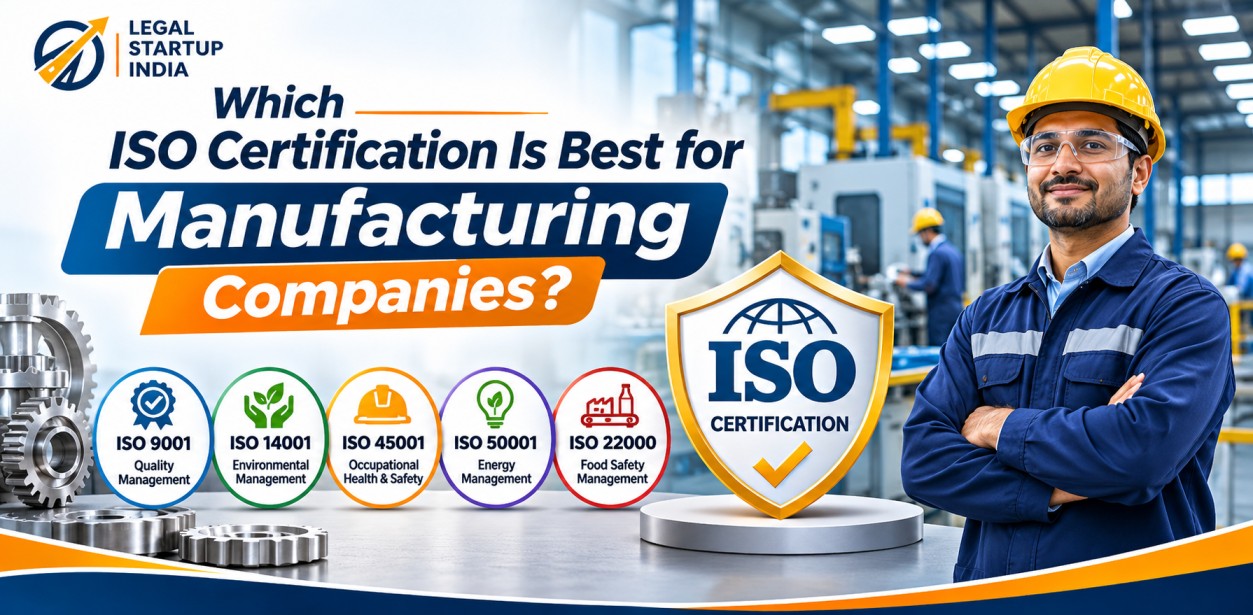 Which ISO Certification Is Best for Manufacturing Companies
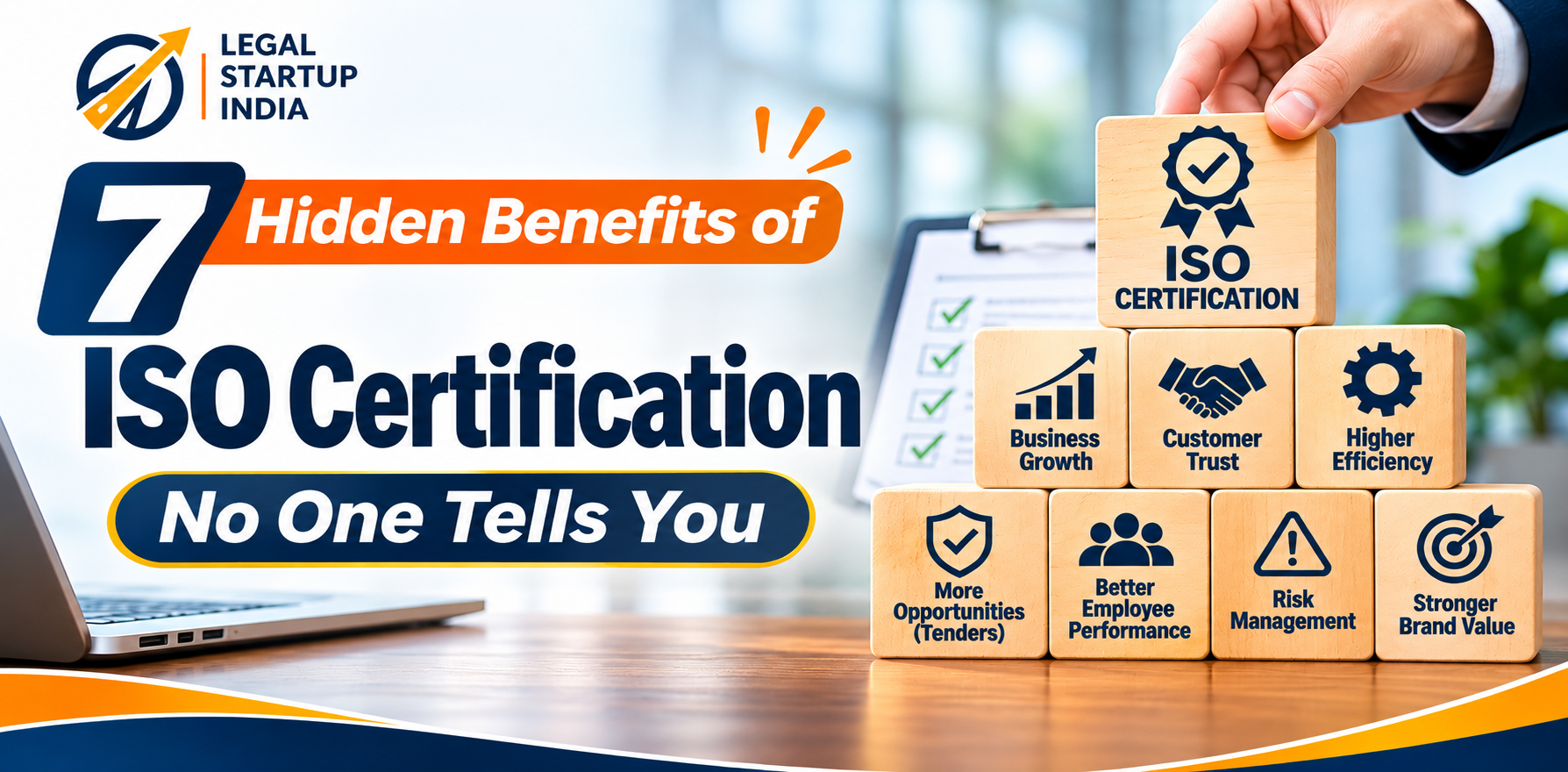 7 Hidden Benefits of ISO Certification No One Tells You
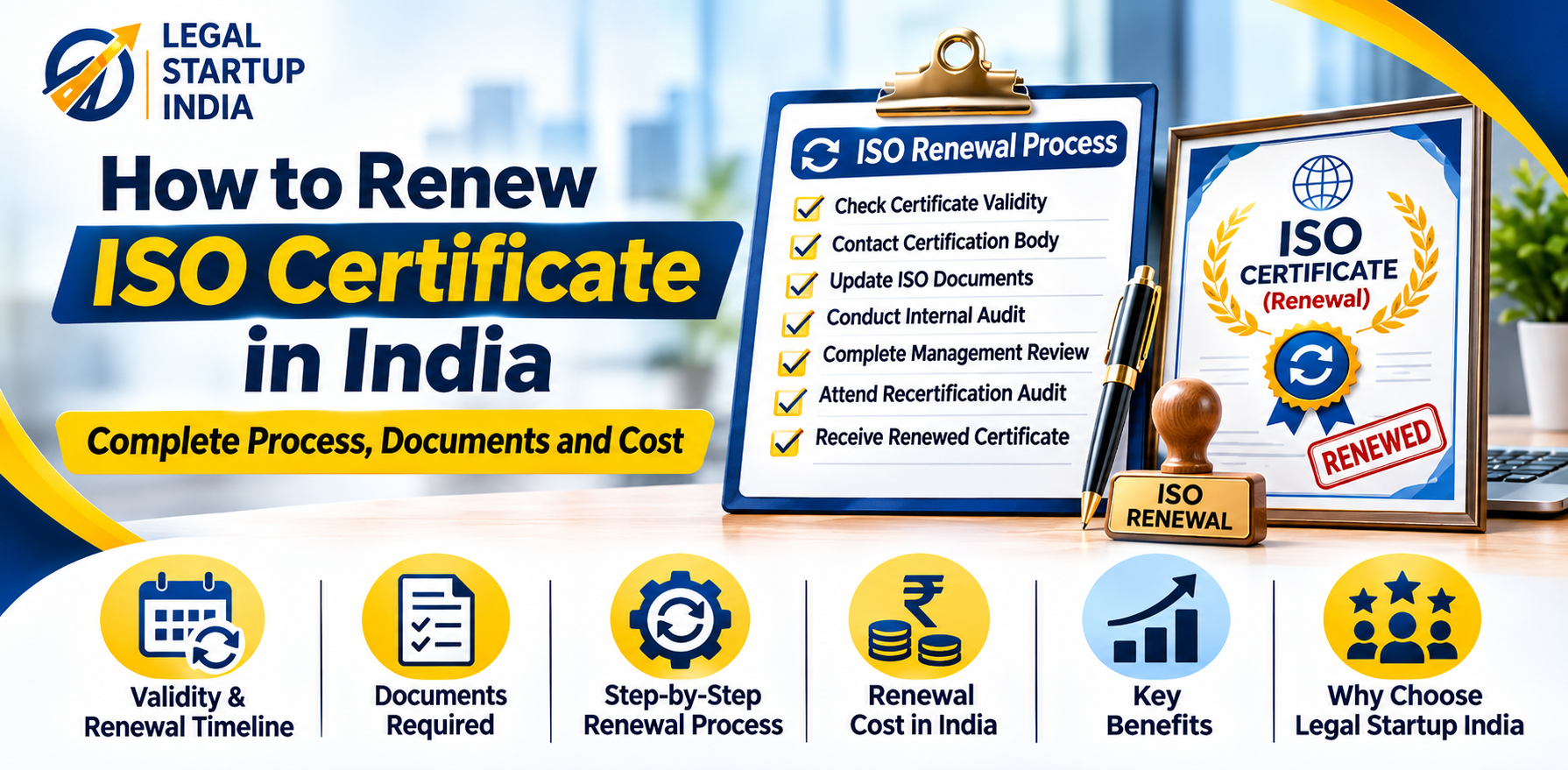 How to Renew ISO Certificate in India
 Common ISO 9001 2026 Implementation Mistakes and How to Avoid Them
 ISO Certification for Export Businesses in India Standards Benefits and Process
 How to Choose the Right ISO Certification Body in India A Business Owners Guide
 Is ISO Certification Mandatory in India Rules Benefits and Industry Requirements
 ISO Certification Cost in India 2027 Fees Audit Charges and Complete Breakdown
 ISO 9001 2026 vs ISO 9001 2015 Key Differences Changes and Transition Guide
 ISO 9001 2026 vs ISO 9001 2015 What Has Changed