
 24 Mar 2026
Admin ISO
51 Comment
24 Mar 2026
Admin ISO
51 Comment
Mistakes to Avoid While Registering a Company in India
Starting a business in India is an exciting journey, but the company registration process can be confusing and full of hidden challenges. Many entrepreneurs rush into registration without proper planning, which often leads to legal complications, delays, penalties, or even business failure.
If you are planning to register a company, understanding the common mistakes to avoid while registering a company in India is crucial. A small error during the registration phase can create long-term issues in taxation, compliance, and operations.
In this guide, we will walk you through the most critical mistakes, how to avoid them, and how to ensure a smooth and legally compliant business setup. Whether you are a startup founder, small business owner, or entrepreneur, this article will help you make informed decisions and save time, money, and effort.
Overview of Company Registration in India
Company registration in India is governed by the Companies Act, 2013 and regulated by the Ministry of Corporate Affairs (MCA). It involves selecting the right business structure, obtaining approvals, and completing documentation.
Types of Companies in India:
- Private Limited Company
- One Person Company (OPC)
- Limited Liability Partnership (LLP)
- Partnership Firm
Choosing the correct structure is the first and most important step in the registration process.
Benefits of Proper Company Registration
Registering your company correctly offers several advantages:
- Legal recognition and protection
- Limited liability for owners
- Easy access to funding and investors
- Tax benefits and government schemes
- Enhanced brand credibility
However, these benefits can only be achieved if the registration is done correctly without errors.
Top Mistakes to Avoid While Registering a Company in India
1. Choosing the Wrong Business Structure
One of the biggest mistakes is selecting an unsuitable business structure.
For example:
- Choosing LLP instead of Private Limited for funding
- Choosing proprietorship when scalability is needed
👉 Tip: Always align your structure with your business goals, funding plans, and scalability.
2. Ignoring Name Approval Guidelines
Many applications get rejected due to incorrect or duplicate company names.
Common issues:
- Similar names already registered
- Use of restricted words
- Trademark conflicts
👉 Solution: Check name availability on MCA and trademark database before applying.
3. Incomplete or Incorrect Documentation
Documentation errors can delay or reject your application.
Documents Required:
- PAN & Aadhaar of directors
- Address proof
- Registered office proof
- Passport (for foreign directors)
👉 Ensure all documents are valid, updated, and properly formatted.
4. Not Understanding Compliance Requirements
Many entrepreneurs think registration is the final step—but it’s just the beginning.
Post-registration compliance includes:
- GST registration
- ROC filings
- Income tax returns
- Annual compliance
👉 Ignoring compliance can result in heavy penalties.
5. Wrong Selection of Authorized Capital
Choosing too low or too high authorized capital can impact your business.
- Low capital may limit growth
- High capital increases compliance costs
👉 Choose a practical and scalable capital structure.
6. Not Registering for Required Licenses
Depending on your business type, additional licenses may be required:
- GST Registration
- FSSAI License
- Import Export Code (IEC)
- Shop & Establishment License
👉 Missing licenses can lead to legal issues.
7. DIY Registration Without Expert Guidance
Many people try to register a company without professional help to save money—but it often leads to costly mistakes.
👉 A legal expert ensures:
- Correct documentation
- Faster approval
- Compliance accuracy
8. Ignoring Trademark Registration
Not protecting your brand name early can result in:
- Legal disputes
- Brand duplication
- Loss of identity
👉 Always consider trademark registration along with company registration.
9. Choosing the Wrong Registered Office Address
Using an incorrect or temporary address can create problems in verification and compliance.
👉 Ensure:
- Valid proof is available
- NOC from owner (if rented)
10. Lack of Business Planning Before Registration
Registering a company without a clear plan leads to confusion later.
👉 Plan:
- Business model
- Revenue strategy
- Compliance requirements
Step-by-Step Process for Company Registration in India
- Choose business structure
- Apply for DSC (Digital Signature Certificate)
- Apply for DIN (Director Identification Number)
- Name approval via RUN/MCA
- File incorporation form (SPICe+)
- Get Certificate of Incorporation
- Apply for PAN & TAN
- Open business bank account
Eligibility Criteria for Company Registration
- Minimum 1–2 directors (depending on structure)
- At least one Indian resident director
- Valid identity and address proof
- Registered office address
Cost of Company Registration in India
The cost depends on various factors:
- Government fees
- Professional fees
- Stamp duty
👉 Approximate cost: ₹6,000 – ₹15,000 (varies by state and service provider)
Why Choose Legal Startup India?
When it comes to company registration, working with experts makes all the difference.
Legal Startup India offers:
- Fast and hassle-free registration
- Expert legal consultation
- Affordable pricing
- End-to-end compliance support
- 100% transparency
With years of experience in legal and business registration services, we ensure your company is registered correctly the first time.
Contact Us
📍 Office Address:
Rohtak Road, Near Nangloi Metro Station,
New Delhi – 110041, India
📞 Phone Numbers:
+91 93199 58655
+91 99908 65699
📧 Email:
info@legalstartupindia.com
🌐 Website:
legalstartupindia.com
👉 Start your business journey with confidence!
FAQs – Mistakes to Avoid While Registering a Company in India
1. What is the biggest mistake during company registration?
Choosing the wrong business structure is the most common and costly mistake.
2. Can I register a company without professional help?
Yes, but it increases the risk of errors and rejection.
3. How long does company registration take in India?
Typically 7–15 working days, depending on approval and documentation.
4. Is GST mandatory after company registration?
Not always. It depends on turnover and business type.
5. What happens if I make mistakes during registration?
Your application may get rejected or delayed, and you may face legal issues later.
6. Do I need a trademark during company registration?
Not mandatory, but highly recommended for brand protection.
7. Can I change company details after registration?
Yes, but it involves additional legal procedures and costs.
Conclusion
Avoiding common mistakes while registering a company in India can save you from unnecessary legal trouble, delays, and financial losses. A well-planned and correctly executed registration process ensures a strong foundation for your business success.
If you want a smooth, error-free, and professional company registration experience, Legal Startup India is here to help you at every step.
👉 Get started today and build your business the right way!
 ISO 9001 Certification for Automobile Industry in Sanand
  ISO 9001 Certification for Chemical Industry in Ahmedabad
  ISO 9001 Certification for Engineering Companies in Ahmedabad
  ISO 9001 Certification for Pharmaceutical Companies in Ahmedabad
  ISO 9001 Certification for Textile Industry in Ahmedabad
 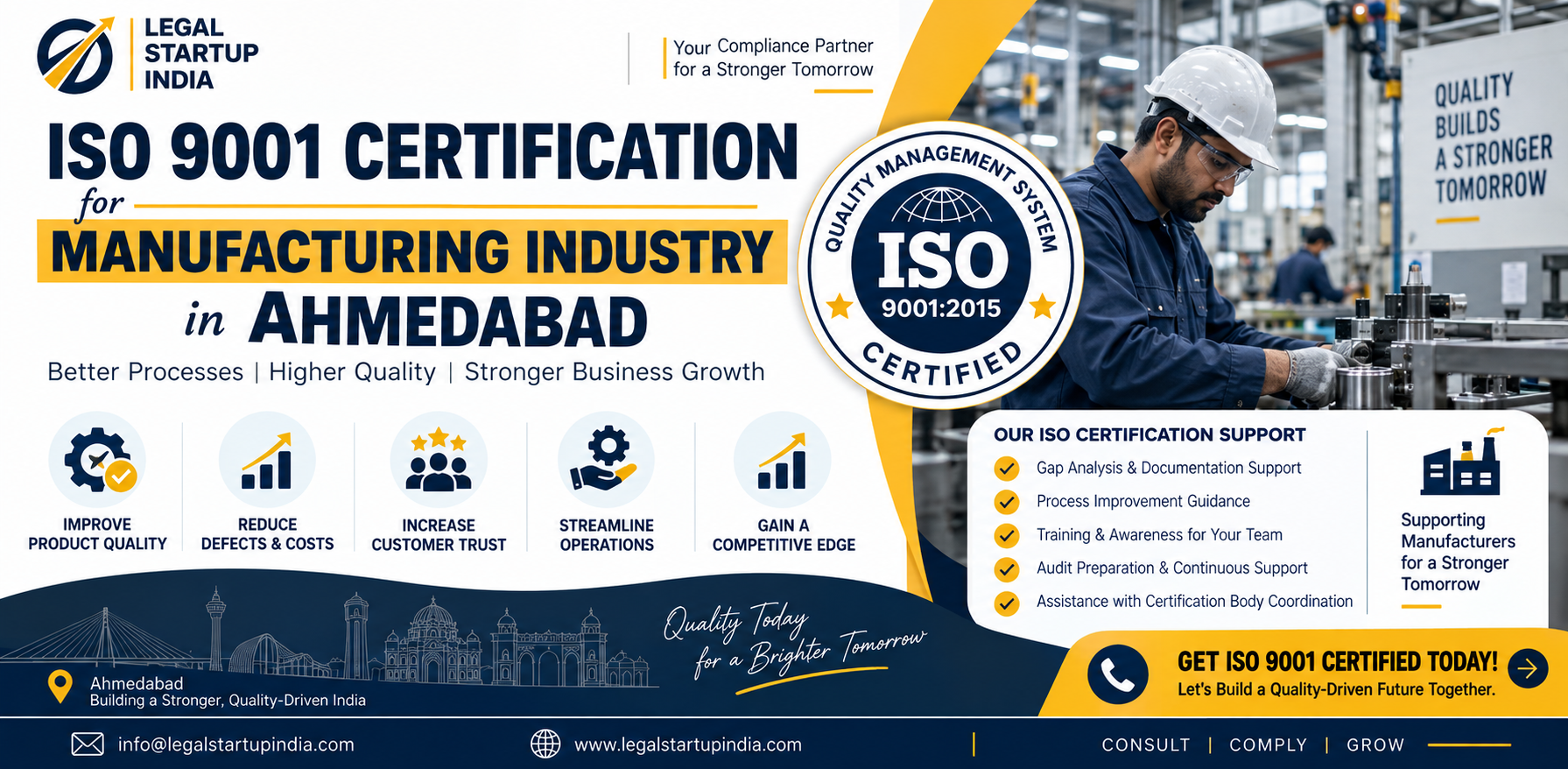 ISO 9001 Certification for Manufacturing Industry in Ahmedabad
  ISO Certification for Pharmaceutical Companies in Ahmedabad
  ISO Certification for Textile Industries in Surat
 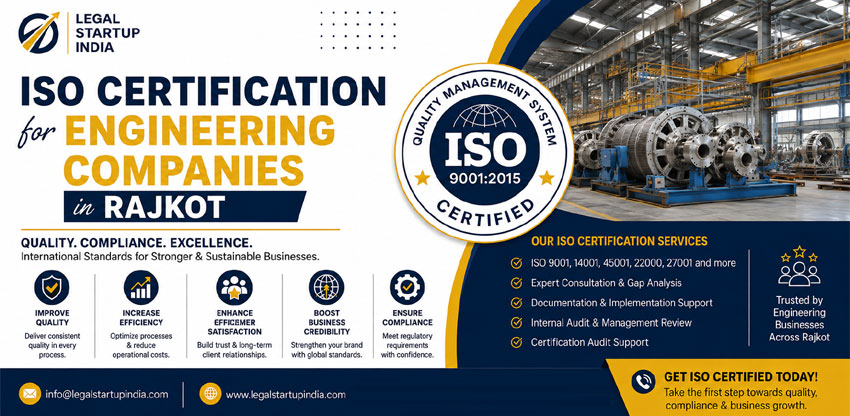 ISO Certification for Engineering Companies in Rajkot
 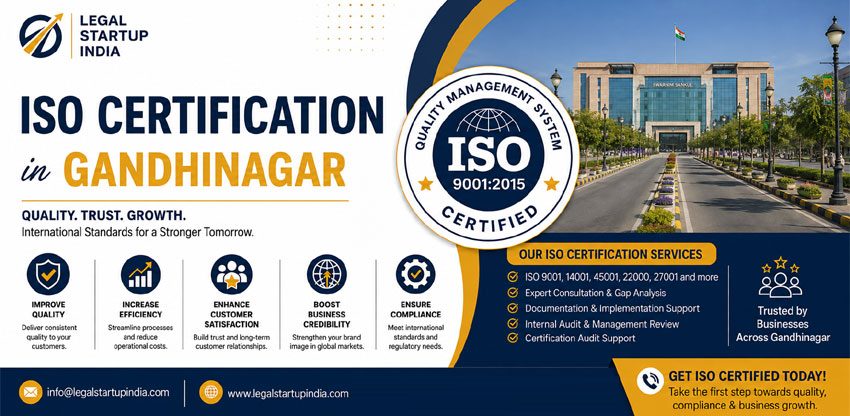 ISO Certification in Gandhinagar